Home > Saving Guides > BraceAbility Sale
The BraceAbility sale collection brings discounted braces, sleeves, splints, supports, medical footwear, and related products into one place. That makes comparison easier, but the best value is not automatically the largest percentage markdown. A support has to match the intended body area, measurement range, level of structure, daily activity, and care plan.
This guide explains a practical way to evaluate the live sale without promising a particular discount. Prices, products, stock, sizes, sale labels, and policies can change. Always rely on the current product page and checkout total when making the final decision.
In this guide
What you may find in the BraceAbility sale
The live collection commonly spans several body areas and product formats. Examples may include knee sleeves and hinged braces, ankle wraps, foot and nighttime supports, wrist or thumb splints, back belts, abdominal binders, compression products, walking shoes, and post-operative supports. The collection can contain both regular sale merchandise and products explicitly marked FINAL SALE.
Those labels matter. A standard markdown tells you that the displayed selling price is below a comparison price shown by the retailer. It does not tell you whether the product is right for your needs. A FINAL SALE label affects return flexibility and deserves special attention before ordering. Sold-out sizes and changing inventory can also narrow the practical choices.
Start with the intended purpose, not the discount
Before browsing, write down why the support is being considered. Is it part of a clinician-directed recovery plan, added stability for an activity, gentle compression, nighttime positioning, or everyday comfort? Different goals can require very different products even when they cover the same body area.
Next, note any instructions already provided by a physician, physical therapist, occupational therapist, or other qualified professional. Product names can mention conditions, but that wording should not replace an individual assessment. More rigid is not always better, and stronger compression is not automatically safer. A product that restricts movement may conflict with a rehabilitation plan or create pressure in the wrong place.
Use filters and collection categories to narrow the list, then read the complete product page. Check whether the design is intended for the left side, right side, or either side; whether it is adjustable; what activities it is designed around; and whether any listed precautions apply. When the answer is unclear, ask the retailer or a healthcare professional before purchasing.
Measure carefully before selecting a size
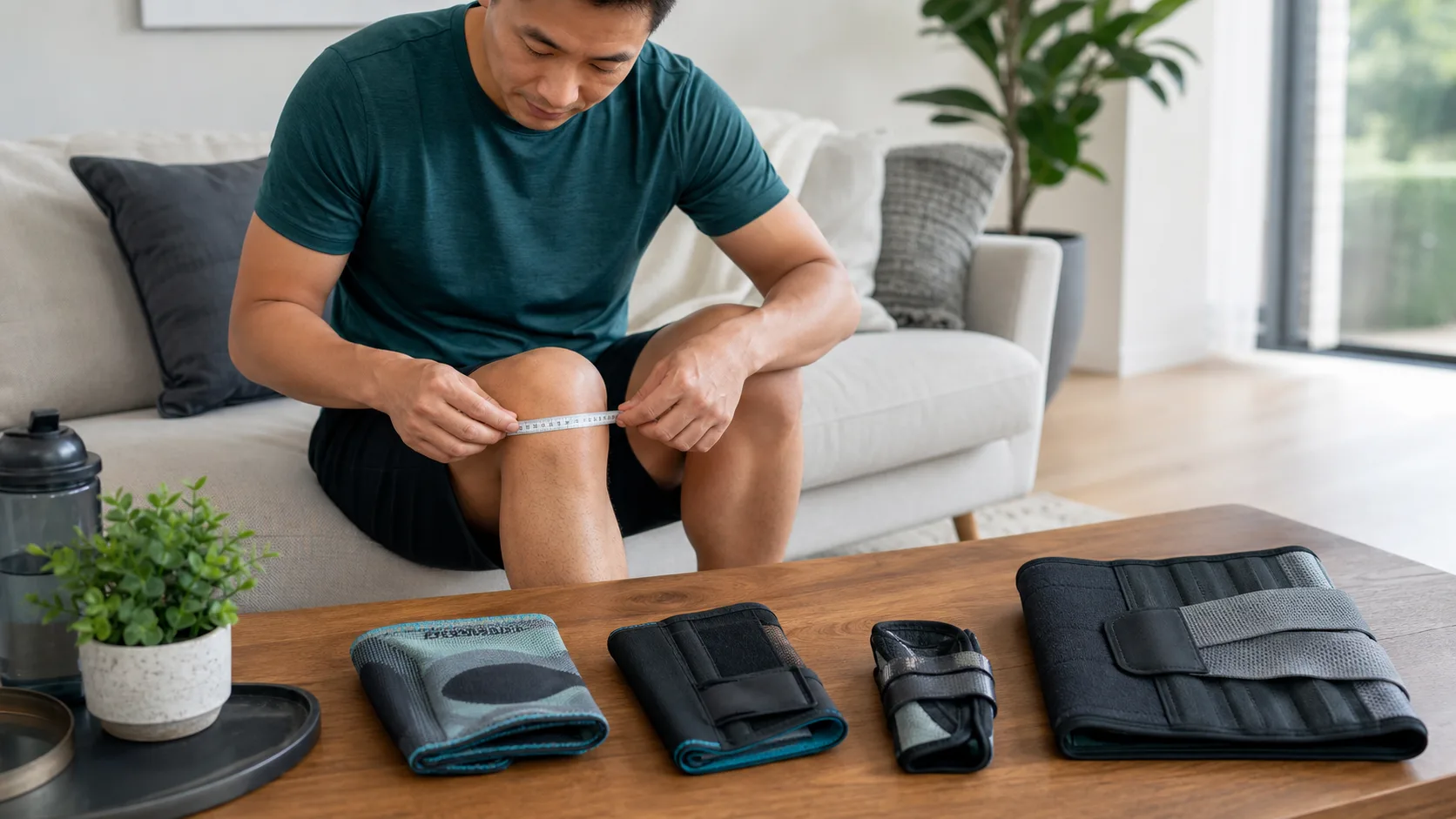
Brace sizing often depends on a circumference or length measured at a precise location. Everyday clothing size is not a reliable substitute. BraceAbility's sizing help states that each product has its own chart and measurement instructions, so repeat the process for every item rather than assuming one brand size applies across the catalog.
Use a flexible measuring tape and follow the diagram on the product page. Keep the tape flat against the skin without pulling it excessively tight. If swelling varies during the day, ask a clinician when to measure and consider whether the relevant area changes size. For paired body parts, such as knees or ankles, measure the side that will actually use the support.
If a measurement sits between sizes, read the product-specific guidance instead of automatically sizing up or down. Consider the intended compression, adjustability, and whether another measurement is required. Save the numbers until the order arrives so you can confirm that the delivered size matches the selection.
Compare sleeves, straps, splints, and structured braces
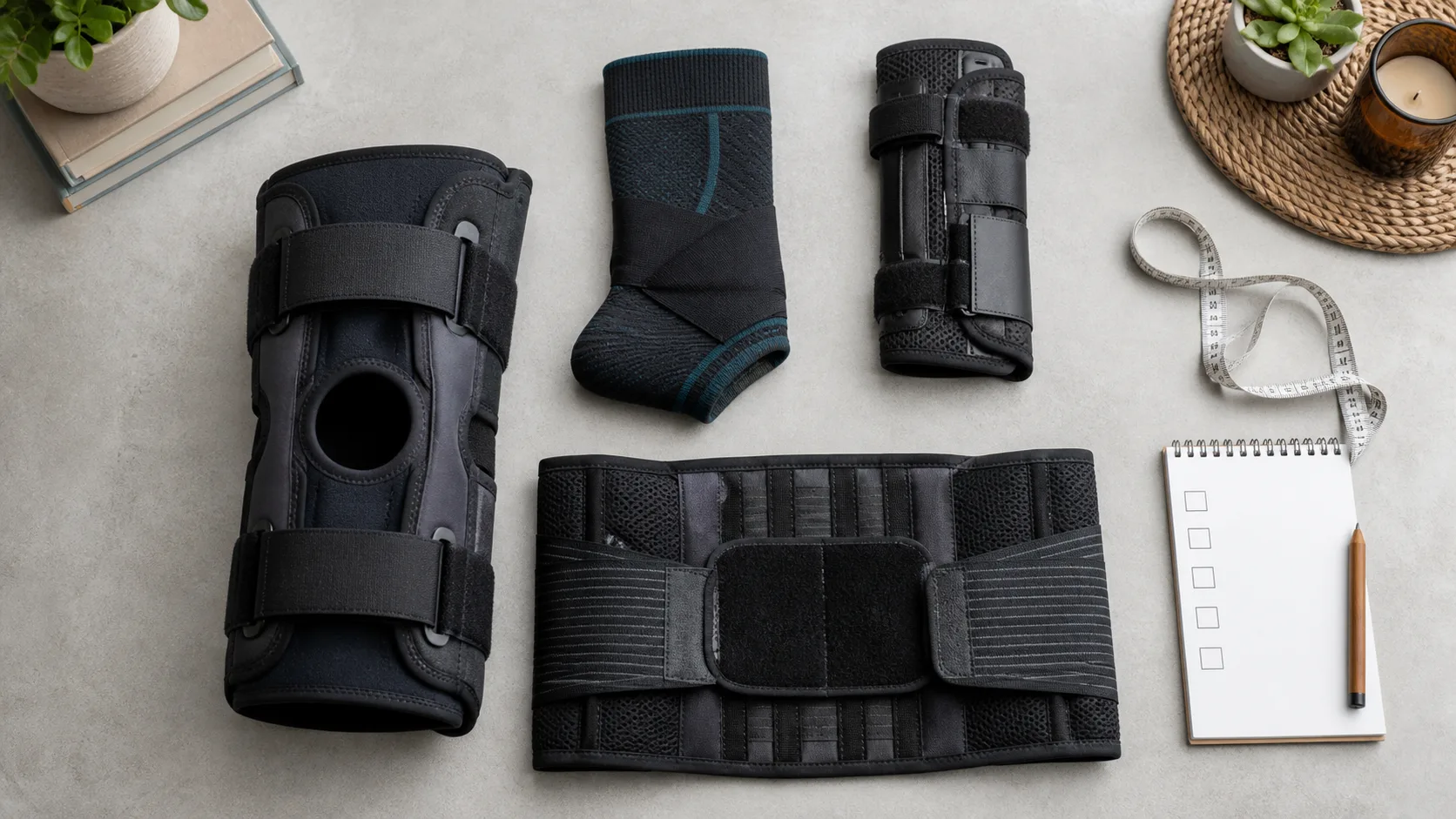
A sleeve generally slips over a joint and may provide compression with fewer adjustments. A wrap or strap can make tension easier to customize. Hinges, stays, rigid shells, and immobilizing components add structure, but they can also add bulk and alter movement. Night supports may hold a position that is unsuitable for daytime walking or exercise.
Look closely at closures and the number of steps needed to put the product on. Someone with limited grip strength or mobility may find small fasteners difficult. Check whether the product can be worn under clothing, whether it fits inside footwear, and whether the materials contact sensitive skin. Product photos, instructions, dimensions, and customer feedback can reveal practical details that the title cannot.
For walking boots, post-operative shoes, or highly structured supports, follow professional instructions about weight bearing, duration, and fit. If you are replacing an existing device, compare the model and recommended features rather than choosing a superficially similar sale item.
How to judge the real sale value
Start with the current selling price and compare it with the retailer's displayed reference price. Then include shipping, taxes, optional accessories, and possible return-label costs. A larger markdown on an unsuitable product is not better value than a smaller discount on the right size and design.
Check whether another current offer changes the total, but never assume promotions stack. Do not add extra products simply to reach a shipping threshold unless they were already needed. When comparing alternatives, match similar construction: a basic elastic sleeve and a hinged brace serve different purposes and should not be compared on price alone.
Review materials, care, and everyday comfort
Breathable knit, neoprene, elastic, foam padding, mesh, plastic supports, and hook-and-loop closures feel different during wear. Think about climate, activity, skin sensitivity, and how long the support may be worn. Seams or closure edges can matter when a product sits against the skin or under clothing.
Read the care instructions before buying. Some supports require hand washing, air drying, or removal of stays before cleaning. If the device will be used frequently, consider drying time and whether its fasteners are likely to collect lint. Inspect the skin after initial use and stop using the product if concerning symptoms develop; seek appropriate professional advice.
Check return eligibility and FINAL SALE labels
BraceAbility's current return information says eligible products must be received back within 30 days of the original purchase date and remain in qualifying condition. Brief try-on is permitted for eligible items, but products showing wear, odors, debris, missing parts, or other condition problems may be rejected. Original shipping charges and return-label costs may not be refundable.
Most importantly, products marked FINAL SALE are not eligible for return or exchange under the current policy. Because a sale collection can contain a mixture of terms, check the label on each product page and in the cart. Keep packaging, tags, pads, inserts, and accessories together until fit has been confirmed.
Review shipping timing and HSA or FSA eligibility
BraceAbility lists free and expedited shipping options with different estimated business-day ranges. Processing occurs on business days, and tracking may take time to update after shipment. The live checkout estimate is more useful than a general timetable because destination, product availability, weekends, and holidays can affect delivery.
Some product pages display HSA or FSA eligibility. That badge can be helpful, but reimbursement depends on the specific item, plan rules, documentation, and applicable requirements. Confirm eligibility with the plan administrator rather than assuming every sale product qualifies.
Frequently asked questions
What is included in the BraceAbility sale collection?
The live collection lists discounted braces, sleeves, splints, supports, footwear, and related products. Selection, prices, stock, and final-sale labels can change.
Do I need a coupon code for the BraceAbility sale?
No coupon code is supplied here. Use the linked sale collection and verify the displayed price and final checkout total.
How should I choose a BraceAbility size?
Follow the measurement location and size chart on the specific product page. Each product may use different sizing instructions.
Can BraceAbility sale items be returned?
Eligibility depends on the product and condition. Items marked FINAL SALE are not eligible for return or exchange under the current policy.
Are braces a substitute for medical care?
No. This guide is not medical advice. Consult a qualified healthcare professional when choosing support for an injury, recovery plan, circulation concern, or diagnosed condition.
Can I use HSA or FSA funds?
Some listings indicate eligibility, but coverage depends on the item, plan, and requirements. Confirm with the plan administrator.
How quickly does BraceAbility ship?
Several shipping speeds are listed and processing occurs on business days. Use the current checkout estimate and tracking information for your order.
Is this an affiliate link?
Yes. CouponEssentials may earn a commission from qualifying purchases through the link, at no additional cost to you.
Final checklist before ordering
- Confirm the product matches the intended use and professional guidance.
- Measure using the exact product-page instructions.
- Review the support level, materials, closures, and care requirements.
- Check stock, side, size, quantity, sale price, and FINAL SALE status.
- Compare the complete checkout total and delivery estimate.
- Save the order information and keep all packaging during the initial fit check.
A sale can make an appropriate support more affordable, but careful selection protects the value of that discount. Take a few minutes to measure, read the full listing, and understand the return terms before paying.
View the Live BraceAbility Sale
CouponEssentials does not sell, prescribe, or fulfill these products. BraceAbility controls pricing, inventory, product information, shipping, returns, and customer service.