Table of contents
Introduction What fake urgency looks like Why it works on shoppers Common signs to watch Real deal vs pressure tactic The pause method How to compare calmly Common mistakes FAQHow to Spot Fake Urgency in Online Sales
One of the most powerful tools in online selling is urgency. Timers, “only a few left” messages, last-chance banners, and flashing sale warnings can all make a shopper feel that they need to act now. Sometimes the urgency is real. Many times it is simply a sales tactic designed to speed up your decision before you have time to compare, think, or reconsider.
This guide explains how fake urgency works and how you can protect yourself from rushed buying. The goal is not to make you suspicious of every deal. The goal is to help you recognize pressure more clearly.
Helpful internal pages on CouponEssentials:
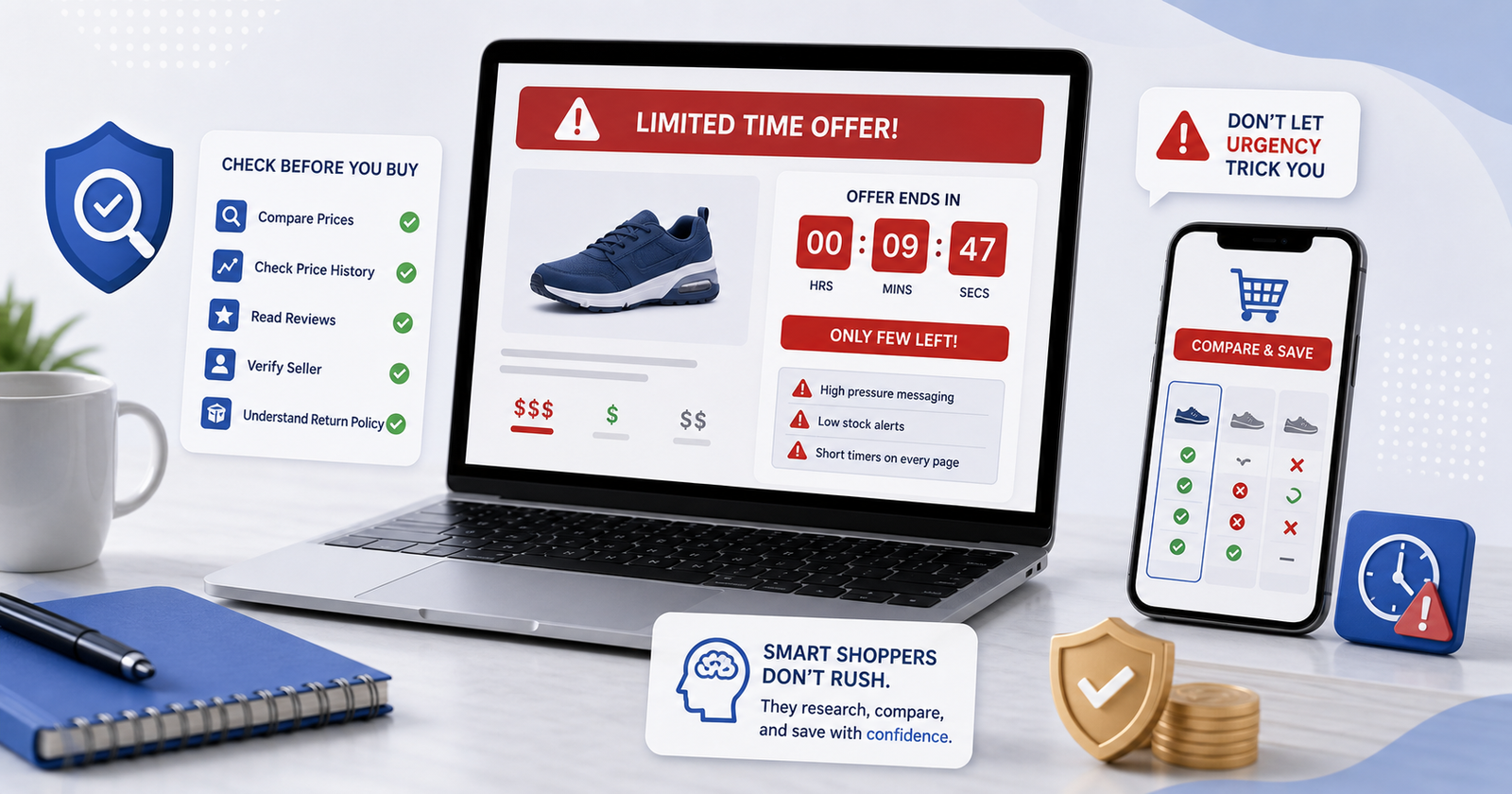
What fake urgency looks like
Fake urgency often looks like a timer that always seems to come back, repeated “sale ends tonight” language, vague stock messages, or banners that make every product feel like an emergency. The goal is to shift your focus from whether the purchase is good to whether you will miss it if you wait.
Countdown timers
Sometimes useful, often just pressure.
Stock warnings
Not always false, but not always helpful either.
Repeated last-chance messages
These can appear again and again even when the promotion returns later.
Best question
Would I still want this if the timer disappeared?
Why it works on shoppers
Urgency works because it shortens the thinking process. Instead of asking whether the item is right, fairly priced, or truly needed, the shopper starts asking whether they will lose the chance if they wait. That emotional switch makes comparison less likely and impulse buying more likely.
Common signs to watch
| Sign | What it often means |
|---|---|
| “Only today” on many products | The store is pushing speed more than value |
| Timer resets or similar offers return often | The urgency may be more about pressure than rarity |
| Stock message with no product context | It may be vague persuasion, not useful detail |
| Big discount with little comparison info | The store wants attention before scrutiny |
Real deal vs pressure tactic
A real deal still looks strong after a calm check. A pressure tactic only feels strong while the timer is visible. The simplest way to tell the difference is to compare the final total, confirm the product details, and ask whether the item was already on your list. If the value disappears once the emotion fades, it was probably not a great purchase.
The pause method
The pause method is simple: stop for a few minutes before buying. If the item is not truly urgent, step away, compare quickly, and return only if the purchase still feels worthwhile. Even a short pause weakens the pressure effect and gives your practical thinking time to return.
How to compare calmly
Compare only one or two trusted alternatives. Start with pages like Deals or Walmart Deals and check whether the current offer is actually strong. The point is not to compare forever. The point is to break the emotional spell of urgency.
Common mistakes
- Believing a timer automatically means the deal is rare.
- Buying something not on your list because the banner feels urgent.
- Skipping price comparison because the sale “might disappear.”
- Focusing on the countdown instead of the final value.
- Assuming urgency equals savings.
FAQ
Does a countdown timer always mean a real sale deadline?
Not always. Timers can represent real deadlines, but they are also commonly used to increase pressure and speed up decisions.
What is the fastest way to resist fake urgency?
Pause for a few minutes, compare one or two alternatives, and ask whether the item still makes sense without the timer.
Can a strong deal still use urgency language?
Yes. The key difference is that a strong deal still looks good after a calm comparison, while a weak one depends on pressure to feel attractive.