
Table of Contents
Introduction Why choose stainless steel lunch boxes Benefits over plastic and glass Types of stainless steel lunch boxes Best stainless steel lunch boxes in 2026 Comparison table Buying guide FAQ Final verdictIntroduction
Lunch boxes seem simple until you use the wrong one every day. A container that leaks, stains, absorbs odors, feels too small, or becomes annoying to wash can turn a helpful routine into a daily frustration. That is one reason stainless steel lunch boxes have gained more attention in recent years. They appeal to shoppers who want less plastic in the kitchen, a cleaner long-term look, and a container that can hold up to repeated school runs, commutes, work bags, and meal-prep cycles.
For many U.S. households, the shift to stainless steel is not only about material preference. It is also about durability and replacement cost. A lunch box that survives repeated use for years may be easier to justify than a cheaper container that warps, cracks, stains, or needs frequent replacement. That does not mean every steel lunch box is automatically perfect. Some are better for dry foods than liquids. Some are better for portion control than large meals. Some are easier for kids, while others are more practical for office workers or meal-prep users.
This article looks at seven well-known options: LunchBots Large Trio, PlanetBox Rover, ECOlunchbox Three-in-One, Bentgo Stainless Steel Lunch Box, Black+Blum Stainless Steel Lunch Box, U Konserve Stainless Steel Container, and Klean Kanteen Food Box Set. They represent different shapes, portion styles, price levels, and packing routines, which makes them useful to compare side by side.
You will also find a buying guide that explains material grades, leak resistance, compartment layouts, portion sizes, dishwasher safety, and meal-prep considerations. The goal is to help you buy a lunch box that matches your routine, not just one that looks good in a product photo.
Why Choose Stainless Steel Lunch Boxes
Stainless steel lunch boxes are popular because they solve several practical problems at once. First, they usually look cleaner for longer than plastic. They are less likely to hold onto stains from sauces or spices, and they tend not to absorb odors as easily after repeated use. That alone matters to people packing lunches every weekday.
Second, stainless steel feels more durable. A lunch box that gets tossed into backpacks, office totes, or car seats takes a lot of everyday abuse. Steel can dent, of course, but it usually handles that kind of routine better than containers that may crack or wear down over time. For parents, commuters, and meal-prep shoppers, that durability can feel worth paying for.
Third, many shoppers simply prefer the idea of a reusable metal food container over more disposable-feeling plastic solutions. They like the long-life mindset behind it. They also appreciate that many stainless steel brands emphasize simple, reusable design rather than short-term convenience alone.
That said, choosing stainless steel does not remove every tradeoff. Some lunch boxes are not fully leakproof. Some use metal dividers that limit flexibility for large sandwiches or oversized portions. Others need separate smaller containers if you pack dips, yogurt, or wetter foods. So the right reason to choose stainless steel is not perfection. It is a better fit for the way you actually pack lunch.
Benefits Over Plastic and Glass Containers
Plastic, glass, silicone, and stainless steel all have a place in food storage, but they feel very different in daily use. Plastic is usually the lightest and cheapest starting point, which is why many families begin there. But over time, some shoppers become frustrated with staining, odor retention, scratches, visual wear, or the feeling that their containers are not built for long-term use.
Glass looks clean and can work well at home, especially for leftovers or refrigerator storage. But it is heavier, can feel riskier in backpacks or lunch bags, and is often less appealing for young kids or travel-heavy routines. Stainless steel sits in an attractive middle ground for many people. It is usually more durable than plastic and lighter or less fragile than glass. That is a useful combination for lunches packed outside the house.
Another big advantage is appearance. Stainless steel tends to keep a simpler, more polished look over time. If you are using the same lunch gear week after week, that matters more than people realize. A container that still feels clean, solid, and organized after months of use often supports the lunch routine better than a container that quickly starts looking tired.
Plastic vs Stainless Steel
A quick comparison of durability, safety, and daily reuse.
- Lightweight, but can wear faster.
- Quality depends more on the material and age.
- May stain or hold odor over time.
- Stronger for repeated daily use.
- Trusted for reusable food gear.
- Keeps a cleaner look for longer.
Stainless steel usually feels stronger and cleaner over long-term daily use.
Types of Stainless Steel Lunch Boxes
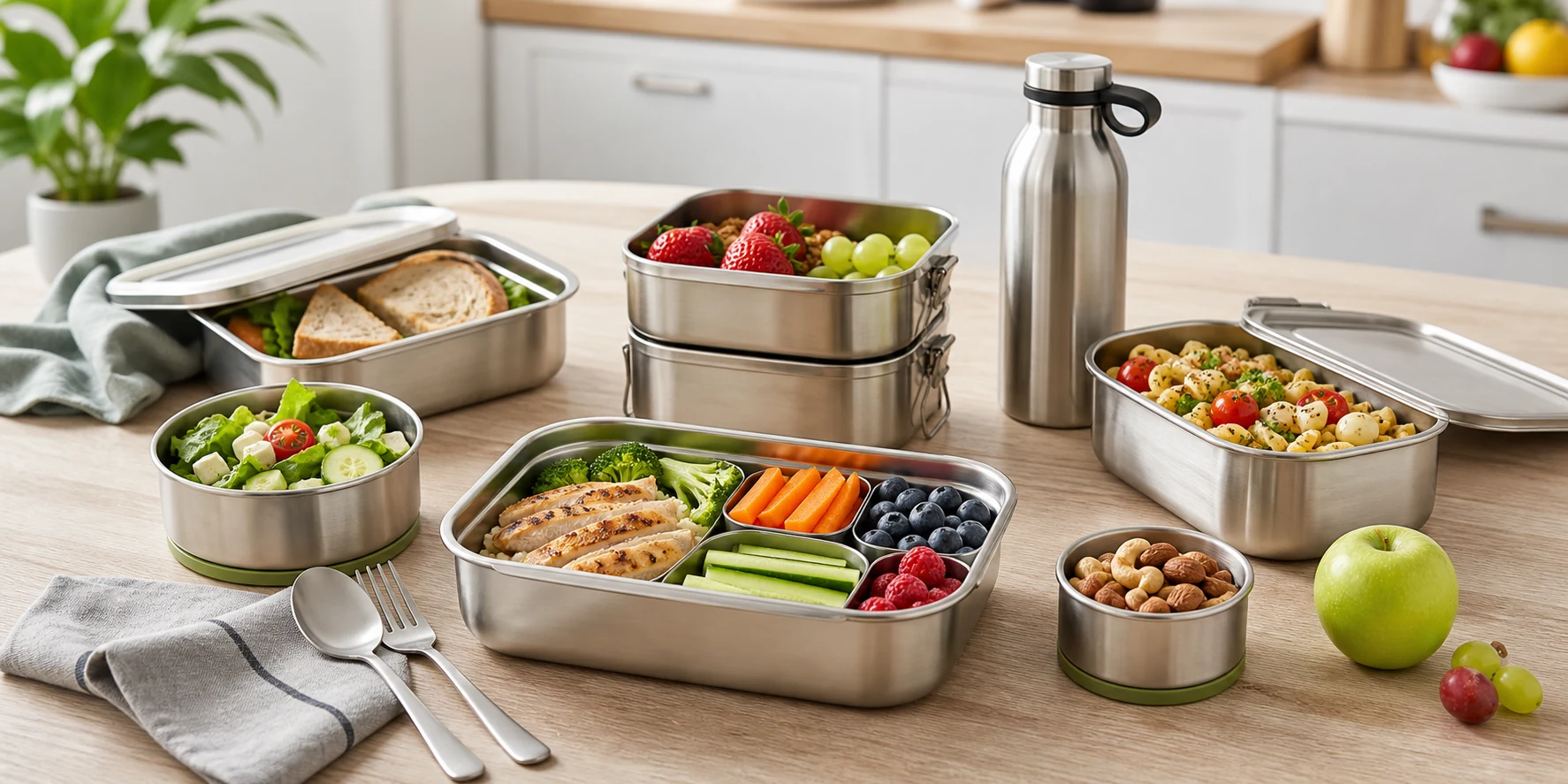
Not every stainless steel lunch box is built the same way. Some are compartment-focused and work like a bento box. Others are open containers better for sandwiches, pasta, salads, or leftovers. Some are designed to be a single full meal container, while others are part of a system with smaller snack containers or stackable pieces.
Compartment lunch boxes are ideal when you want food separated. Kids lunches, snack-style meals, and portion control often work well here. The tradeoff is that compartments limit flexibility. If you want to pack one larger item, a divided layout may feel restrictive.
Open steel containers work better for bigger meals or foods with less need for separation. They are often easier to wash and easier to repurpose for leftovers, but they may need smaller inserts if you want multiple foods kept apart.
Stackable systems are popular for shoppers who like flexibility. One tier can hold fruit, another can hold a sandwich, and another can hold snacks or sides. These are useful when you want customization, although they may take more time to open, close, and organize.
Food box sets are best for meal-prep households or families that want several sizes. Instead of one all-in-one lunch box, the set gives you containers that can be mixed and matched. That flexibility can be very appealing, especially for adults packing varied lunches during the workweek.
Food Storage Material Comparison
Plastic, stainless steel, glass, and silicone each fit different lunch routines.
Lightweight and budget-friendly, but can stain faster.
Durable, reusable, and trusted for daily lunch packing.
Clean look and easy visibility, but heavier for travel.
Flexible for snacks and sides, but less structured.
Each material has a use, but stainless steel often gives the best everyday balance.
Best Stainless Steel Lunch Boxes in 2026
The products below were chosen because they represent different lunch-packing styles rather than one single ideal use case. Some are better for families. Some are more adult friendly. Some lean into compartments, while others work better as flexible containers. To keep this guide practical, the notes below focus on everyday use, typical material claims, and the tradeoffs shoppers should think about before buying.
LunchBots Large Trio
Check on AmazonOverview: LunchBots Large Trio is a divided stainless steel bento-style lunch box that appeals to shoppers who want clean separation without extra plastic inserts.
School lunches, snack-style meals, and adults who like portion separation.
Approx. 5 cups total, depending on how each section is used.
Commonly marketed as 18/8 or 304 stainless steel; confirm the live listing.
Better for dry foods than fully liquid meals unless packed with care.
Simple layout, roomy for a divided design, easy to pack visually, and durable for repeat use.
Not the strongest choice for sauces or runny foods, and the fixed dividers limit flexibility.
Usually easy to clean because of the simple steel interior, but dry fully to keep it looking polished.
A very practical starter pick for shoppers who want a roomy divided stainless steel lunch box with minimal fuss.
PlanetBox Rover
Check on AmazonOverview: PlanetBox Rover is one of the best-known stainless steel bento systems for families, especially shoppers who want multiple compartments and a lunch box designed around organized school meals.
Kids lunches, family lunch packing, and highly organized portion-based meals.
Approx. 4.5 to 5 cups across the compartment layout.
Commonly described as 18/8 stainless steel on brand and seller pages.
Works best with the right accessories for wetter foods; the main box itself is strongest for separated solid foods.
Excellent organization, kid-friendly layout, strong brand recognition, and a reusable lunch system feel.
Higher price point and may feel more structured than some adults need for simple packed lunches.
Regular washing is straightforward, but accessories and soft components may need separate care checks.
One of the strongest choices for families who want a premium compartment lunch box system and are willing to pay more for that structure.
ECOlunchbox Three-in-One
Check on AmazonOverview: ECOlunchbox Three-in-One stands out for shoppers who want nesting or stack-style flexibility rather than one fixed layout.
Flexible packing, multi-part lunches, and shoppers who like separate components instead of fixed dividers.
Approx. 5 to 6 cups total across the three-piece system.
Often sold as food-grade stainless steel; many listings reference 201 or 304 depending on the product version, so verify the current page.
Usually strongest for dry foods unless the product version includes dedicated leak-resistant components.
Flexible configuration, easy food separation, and appealing for shoppers who dislike fixed compartments.
Multiple pieces mean more parts to keep track of, and it may take longer to pack than a one-piece bento box.
Steel pieces are typically easy to wash, but multi-piece systems take a bit more drying and organizing afterward.
A strong option for shoppers who value flexibility and do not mind a multi-piece lunch routine.
Bentgo Stainless Steel Lunch Box
Check on AmazonOverview: Bentgo brings a familiar lunch-brand feel into stainless steel, which may appeal to parents or commuters who want a more mainstream lunch-box experience with upgraded materials.
Shoppers who want a recognizable lunch-box style and easy transition from plastic bento gear.
Approx. 4 to 5 cups depending on compartment and lid design.
Stainless steel body with food-safe components; the exact grade is not always emphasized equally on every listing, so check the current seller page.
Often a stronger choice than basic open steel boxes when the lid design is built for tighter everyday carrying.
Accessible brand, structured lunch layout, and good appeal for everyday packed meals.
Exact care rules matter, and buyers should look closely at which parts are steel versus soft-seal components.
Check current dishwasher guidance carefully because lids and sealing parts may have different care rules than the base.
A practical crossover option for buyers who want stainless steel without giving up a more familiar lunch-box style.
Black+Blum Stainless Steel Lunch Box
Check on AmazonOverview: Black+Blum often attracts shoppers who care about design as much as durability. It usually feels more lifestyle-oriented than a school bento system.
Office workers, adults, and shoppers who want a cleaner modern design with practical everyday function.
Approx. 1 liter or around 4 cups, depending on the model.
Commonly listed as 18/8 or food-grade stainless steel; confirm live model details before purchase.
Often stronger than simple open steel boxes when the lid and seal design are part of the product appeal.
Stylish design, adult-friendly appearance, and a solid fit for work lunches or cleaner meal presentation.
Less compartment-heavy than school-style bentos, and some shoppers may want more built-in separation.
Simple steel bodies are usually easy to wash, but always check seal and strap care on the current product page.
A good pick for adults who want a lunch box that feels polished, reusable, and less kid-focused.
U Konserve Stainless Steel Container
Check on AmazonOverview: U Konserve containers are appealing for shoppers who want simple reusable containers that can work for lunches, snacks, leftovers, and small meal-prep use.
Flexible lunch packing, side dishes, snacks, and shoppers who prefer modular containers over one fixed bento box.
Varies by size; many shoppers choose mid-size versions in the roughly 20 to 25 ounce range.
Commonly listed as 18/8 or 304 stainless steel on reusable food-container pages.
Depends on the lid style and size chosen; some configurations are better for solids than liquids.
Versatile sizing, reusable simplicity, and good fit for mixed lunch systems.
Because it is more container-like than a classic bento box, some users may need several pieces for a full lunch setup.
Generally easy to rinse and wash, though lids and seals should still be checked for care instructions.
Best for shoppers who want modular reusable food containers that can flex between lunch duty and general kitchen use.
Klean Kanteen Food Box Set
Check on AmazonOverview: Klean Kanteen Food Box Set is strongest for shoppers who want several sizes rather than one single lunch format. It can be especially appealing to meal-prep users and households sharing reusable food gear.
Meal prep, mixed household use, and shoppers who want several reusable sizes for lunches and snacks.
Set capacity varies by included box sizes, giving more flexibility than one fixed lunch box.
Klean Kanteen often markets food-contact products in 18/8 stainless steel; verify the live listing for the exact set.
Depends on which food box and lid type are included; some sets prioritize modular storage more than full leakproof performance.
Flexible sizing, useful beyond lunch alone, and attractive for organized meal-prep households.
Less of an all-in-one bento solution, and some users may prefer a single carry-ready lunch layout.
Easy to rotate through the week, but label or store the sizes well so the set stays organized over time.
A strong fit for shoppers who want a multi-size reusable system rather than one dedicated lunch-only container.
Comparison Table
| Product Name | Capacity | Compartments | Material Grade | Dishwasher Safe | Best For | Amazon Link |
|---|---|---|---|---|---|---|
| LunchBots Large Trio | Approx. 5 cups | 3 fixed sections | Commonly 304 / 18-8 | Check live listing | Divided school or work lunches | Check on Amazon |
| PlanetBox Rover | Approx. 4.5–5 cups | Multi-compartment bento | Commonly 18-8 | Check live listing | Kids and family lunch packing | Check on Amazon |
| ECOlunchbox Three-in-One | Approx. 5–6 cups total | Multi-piece nested system | Varies by listing; verify current specs | Check live listing | Flexible multi-part lunches | Check on Amazon |
| Bentgo Stainless Steel Lunch Box | Approx. 4–5 cups | Structured lunch layout | Verify current listing | Check live listing | Mainstream bento-style daily use | Check on Amazon |
| Black+Blum Stainless Steel Lunch Box | Approx. 1L / 4 cups | Open layout or light separation | Commonly 18-8 / food-grade | Check live listing | Adult work lunches | Check on Amazon |
| U Konserve Stainless Steel Container | Varies by size | Single-container modular use | Commonly 304 / 18-8 | Check live listing | Flexible snacks and side dishes | Check on Amazon |
| Klean Kanteen Food Box Set | Set of multiple sizes | Depends on included boxes | Commonly 18-8 | Check live listing | Meal prep and mixed household use | Check on Amazon |
Buying Guide
The best stainless steel lunch box for one person may be the wrong choice for another. The right decision depends on who is using it, what kind of food is being packed, how much separation matters, and whether the lunch box is expected to hold wet items or mostly dry meals. This is where shoppers can make a much stronger decision than simply comparing prices.
304 vs 316 stainless steel
304 stainless steel, often marketed as 18/8, is the most common premium lunch-box material for everyday food use. It is popular because it offers a strong balance of durability, corrosion resistance, and practical value. 316 stainless steel may be advertised as a more corrosion-resistant premium option in some food gear, but it is not necessary for every lunch box shopper. For most households, a well-made 304 stainless steel lunch box is already a strong long-term choice.
Stainless Steel Grades Explained
A simple guide to 201, 304, and 316 stainless steel in lunch gear.
More budget-friendly, but less commonly preferred for premium food containers.
The most common premium lunch-box grade for corrosion resistance and daily food use.
Often associated with stronger corrosion resistance, usually at a higher price point.
For most shoppers, a well-made 304 stainless steel lunch box is already a strong choice.
For most shoppers, `304 / 18-8` is the most practical material to look for.
Leakproof vs non-leakproof designs
This is one of the most important lunch-box buying questions. Many stainless steel lunch boxes are excellent for sandwiches, fruit, vegetables, wraps, snacks, and dry meal-prep foods. They are not always ideal for soup, thin sauces, yogurt, or wetter items unless the lid and seal are specifically designed for leak resistance. Shoppers should not assume steel automatically means leakproof. Read the current listing carefully.
Compartment layouts
Compartment lunch boxes are helpful when you pack multiple foods and do not want them touching. They are especially good for kids, snack lunches, and portioned lunches. But if you often pack larger food items, a fixed compartment system can feel restrictive. That is why open-container and multi-piece systems still appeal to many adults.
Portion sizes
Lunch-box size should match appetite and routine, not marketing alone. Smaller boxes often work better for young kids and shorter school days. Larger boxes or systems are better for office workers, active adults, and meal-prep users who need a full entree, sides, and snacks. A lunch box that is too small becomes frustrating quickly, while one that is much too large may feel awkward to carry every day.
Kids vs adults lunch boxes
Kids usually benefit from more visual separation and easier layouts. Adults often care more about full-meal capacity and flexible packing. A lunch box designed for one group is not always ideal for the other, so it helps to choose based on the actual user rather than simply choosing the brand with the biggest following.
Dishwasher safety
Many stainless steel containers are easy to wash, but dishwasher safety is not always identical across every part. The steel base may be fine while lids, seals, straps, insulated parts, or painted accents need gentler care. This is an important part of real ownership because a lunch box can look great on day one and become annoying fast if the cleaning routine does not match your life.
Meal prep considerations
Meal-prep shoppers should think beyond the lunch box itself. Do you want one all-in-one carry box? Or do you want multiple sizes that help with leftovers, snacks, and batch-made lunches? Sometimes a set of steel food boxes is more useful than a single bento, especially for households prepping several days at once.
How to Choose the Right Lunch Box
Match the design to who is using it and how the meals are packed.
Smaller portions and easier compartments often matter more than maximum capacity.
Balanced portion space and easy carrying matter for daily commuting.
Stackability and room for fuller portions help with batch-prepped lunches.
Leak resistance and durable closures matter more when the lunch box moves around often.
The right lunch box depends on who is using it and how the meals are packed.
Lunch Box Buying Guide
Start with your routine, then narrow the features that matter most.
Important if you pack sauces, yogurt, or wet foods.
Helpful when you want foods separated and organized.
Match the size to the appetite and daily routine.
Check whether the base, lid, and seals have different care rules.
Choose the lunch box that matches your real daily use, not just the design.
If you check these basics first, choosing the right lunch box becomes much easier.
FAQ
Are stainless steel lunch boxes better than plastic?
For many shoppers they are attractive because they are durable, reusable, less likely to stain, and often feel better suited to long-term daily use than basic plastic containers.
What stainless steel grade is best for lunch boxes?
304 stainless steel, often marketed as 18-8, is the most common premium grade for everyday food containers. Some specialty products may mention 316, but that is not required for every lunch routine.
Are stainless steel lunch boxes leakproof?
Some are more leak-resistant than others, especially when seals are involved, but many steel lunch boxes are still strongest for dry foods unless the current product listing clearly says otherwise.
Which stainless steel lunch box is best for kids?
Kids often do best with a manageable compartment layout and easy portions. Family-focused bentos like PlanetBox-style systems are popular for that reason.
Is 316 stainless steel necessary?
Usually not. Most everyday lunch-box shoppers are well served by a good 304 or 18-8 stainless steel product.
Can I put stainless steel lunch boxes in the dishwasher?
Many steel bases can go in the dishwasher, but lids, silicone seals, painted parts, or straps may have different care instructions. Always verify the current manufacturer guidance.
What size lunch box is best for adults?
Adults often want enough room for a full entree, sides, and snacks. Medium to large lunch boxes or flexible food-box sets usually work better than very small kid-focused bentos.
What is the best stainless steel lunch box for meal prep?
Meal-prep users usually benefit from larger open containers or multi-size systems because they offer more flexibility over several weekdays.
Do stainless steel lunch boxes keep food hot or cold?
Standard stainless steel lunch boxes focus more on durable food storage than true temperature retention. Insulated accessories or dedicated thermal containers are better for that goal.
How do I choose between compartments and open containers?
Choose compartments if food separation matters most. Choose open containers or multi-piece sets if you want more flexibility for larger items, leftovers, or changing meal-prep needs.
Final Verdict
If you want the simplest answer, here it is: the best stainless steel lunch box in 2026 depends on whether you value compartments, flexibility, leak resistance, or meal capacity most. PlanetBox Rover stands out for families and organized kids lunches. LunchBots Large Trio is a strong all-around divided pick. Black+Blum feels especially good for adult work lunches. Klean Kanteen Food Box Set and U Konserve make more sense for shoppers who want modular flexibility. ECOlunchbox Three-in-One is appealing when multi-piece separation matters more than a fixed layout. Bentgo Stainless Steel Lunch Box is a useful crossover option for shoppers who want a more familiar mainstream lunch-box feel.
The smartest next step is to match the product to your actual routine. Think about who is using it, whether you need separated foods, how often you pack wet items, and how much cleanup effort feels realistic during a busy week. When the lunch box fits the routine, the value is much easier to feel over time.