

Table of Contents
Quick answer summary What is FYTOO? How to choose glasses for your face shape Frame-shape comparison Understanding frame measurements Practical fit examples Frame material comparison Full-rim, semi-rimless, and rimless frames Choosing frame colors Choosing lenses FYTOO vs other shopping options Benefits and limitations of buying online Before-you-buy checklist Common online glasses shopping mistakes How to place an online glasses order Final recommendation FAQ Sources and further readingBlog / How to Choose the Best Women’s Glasses Online: FYTOO Shopping Guide
Quick Answer Summary
An up-to-date prescription and accurate pupillary distance matter more than style trends if you are ordering prescription glasses online.
Lens width, bridge width, temple length, lens height, and overall frame width are often the clearest clues about fit.
Shape advice can help narrow options, but comfort, confidence, and personal preference should still lead the decision.
Single-vision, readers, progressives, and optional coatings can change both the price and the practicality of the order.
Do not judge value only by the starting frame price. Look at the total once lenses and upgrades are included.
Shipping, warranty, return, exchange, and promotional details can change, so check the live FYTOO website before ordering.
Online shopping can be a very practical way to compare women’s frames, but the best result usually comes from slow comparison, accurate information, and realistic expectations about fit. A thoughtful shopper often does better than a rushed shopper, even when both are choosing from the same frame page.
What Is FYTOO?
Based on its public category and product pages, FYTOO appears to operate as an online eyewear retailer that presents eyeglass frame shopping, including women’s glasses pages and prescription-glasses related buying options. The site displays frame listings, product pages, and style-oriented browsing that is typical of online eyewear shopping. That makes it relevant to shoppers who prefer to compare frames at home instead of depending only on an in-person display case.
From a shopper’s perspective, the most useful way to think about FYTOO is not as a guaranteed answer, but as one online place to compare women’s frame styles, shapes, colors, and measurements. Readers should still review the live product page for whatever matters most to them: prescription entry options, frame dimensions, material, lens choices, total price, shipping details, and return or exchange information.
Product selection, offers, prices, and policies may change. Verify current details before purchasing.
How to Choose Glasses for Your Face Shape
Face-shape advice is one of the most popular parts of glasses shopping, but it is also one of the most misunderstood. A lot of online advice makes it sound as if every face has one correct frame and one wrong frame. Real life is not that strict. Face shape can help you explore styles that create a certain visual effect, but it should not override comfort, size, bridge fit, or personal style.
Round face
Shoppers with rounder facial lines often explore rectangle, square, cat-eye, or geometric frames because those styles can add visual contrast. That does not mean round frames are automatically off-limits. A carefully sized round or oval frame can still look polished if the fit is right and the wearer prefers a softer look.
Oval face
Oval faces are often described as versatile because many frame families can work well visually. Rectangle, cat-eye, round, square, and browline styles may all be worth trying. The main caution is proportion. A very oversized frame may still overwhelm smaller features, while a very narrow frame may feel visually underpowered.
Square face
Many shoppers with squarer facial lines consider rounder or more curved styles because those shapes can create a softer contrast. Oval and round frames are common starting points. But cat-eye and geometric styles can also work when the wearer likes a stronger fashion statement.
Heart-shaped face
Shoppers with a broader forehead and narrower lower face sometimes look at lighter-looking frames, oval shapes, soft cat-eye styles, or frames that do not feel too heavy at the brow. Even so, bolder styles may still work if the bridge and overall width are flattering and comfortable.
Diamond face
Diamond-shaped faces often suit styles that bring a little softness or width near the brow. Oval, cat-eye, browline, or gently rounded geometric shapes can be interesting starting points. The best choice still depends on size and confidence, not only on shape theory.
Oblong or rectangular face
Shoppers with longer facial lines may consider deeper lenses, oversized frames, softer rounded corners, or styles that add some visual height. That said, highly structured rectangles can still work if the wearer wants a sharper, more tailored look. Face shape should always remain a guide rather than a rulebook.
Frame Shapes Guide
Use shape advice as a style tool, then refine the choice with real measurements and comfort.
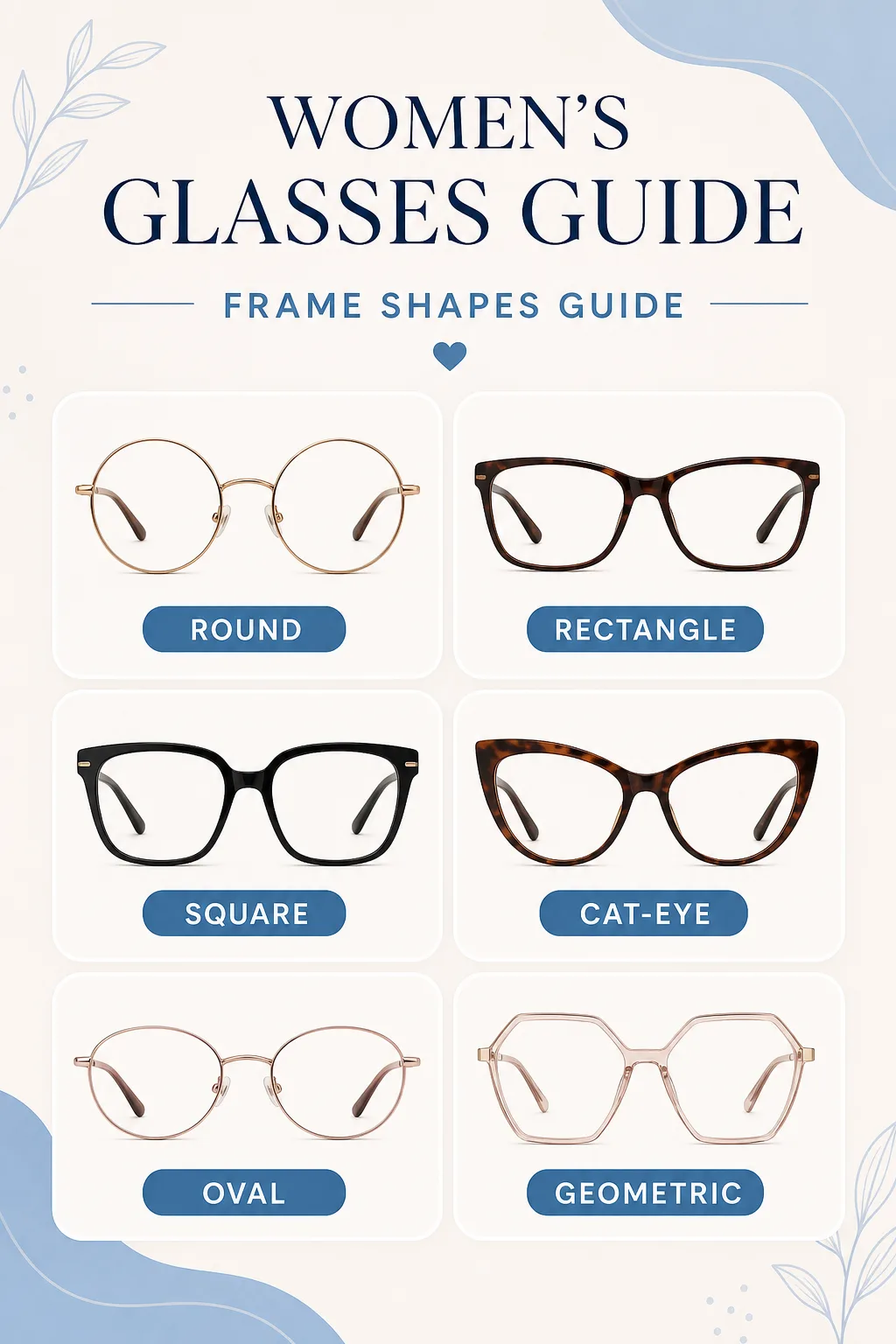
These shapes help describe style direction. Fit and confidence still matter more than shape labels alone.
Frame-Shape Comparison
| Frame Shape | Visual Effect | Often Considered For | Style Character | Possible Fit Considerations |
|---|---|---|---|---|
| Rectangle | Structured, elongating | Shoppers who want sharper lines | Clean and practical | Can feel too wide or too flat if the bridge fit is off |
| Square | Bold and defined | Statement looks, tailored outfits | Confident and crisp | May feel visually heavy on smaller features |
| Round | Softer, classic, artistic | Vintage-inspired or softer styling | Relaxed and expressive | Sizing matters because very round lenses can look oversized fast |
| Oval | Soft balance | Shoppers wanting versatility | Easygoing and understated | Can look too subtle if the frame is too small |
| Cat-eye | Lifted, stylish emphasis | Fashion-focused looks | Polished and expressive | Wing angle and width can affect comfort and confidence |
| Aviator | Open, relaxed silhouette | Casual or fashion-driven styling | Cool and recognizable | Bridge shape and lens depth need close attention |
| Browline | Upper-frame emphasis | Classic mixed-material looks | Smart and traditional | The brow weight can feel strong on delicate features |
| Geometric | Distinct and modern | Shoppers wanting something less standard | Creative and directional | Angles can feel sharp if size is not well balanced |
| Rimless | Minimal and light-looking | Subtle everyday wear | Low-visual-weight | Lens shape, hardware, and maintenance matter more |
| Oversized | Fashion impact and coverage | Statement styling or stronger presence | Bold and trend-aware | Width, weight, and cheek contact should be checked carefully |
Understanding Frame Measurements
Many online glasses problems start with measurements that were never checked. Even if a frame looks right in a product image, the listed dimensions can completely change how it feels on your face. The most useful numbers to understand are lens width, bridge width, temple length, overall frame width, and lens height. For prescription orders, pupillary distance can also matter depending on the lens order.
A comfortable pair you already own can be a practical reference. Many frames include a measurement string printed inside the temple. A sample such as 52–17–140 generally indicates 52 mm lens width, 17 mm bridge width, and 140 mm temple length. Retailers may display measurements a little differently, so always verify how the product page presents them.
Overall width is especially useful for shoppers who often notice that frames extend too far past the face or feel cramped at the temples. Lens height matters when a style is especially tall or especially shallow. If you have a stronger prescription, lens shape and size may influence how thick the finished lens appears. These are not abstract numbers. They affect the real wearing experience.
Eyeglass Frame Measurements
These are the numbers most online shoppers should learn before buying frames.
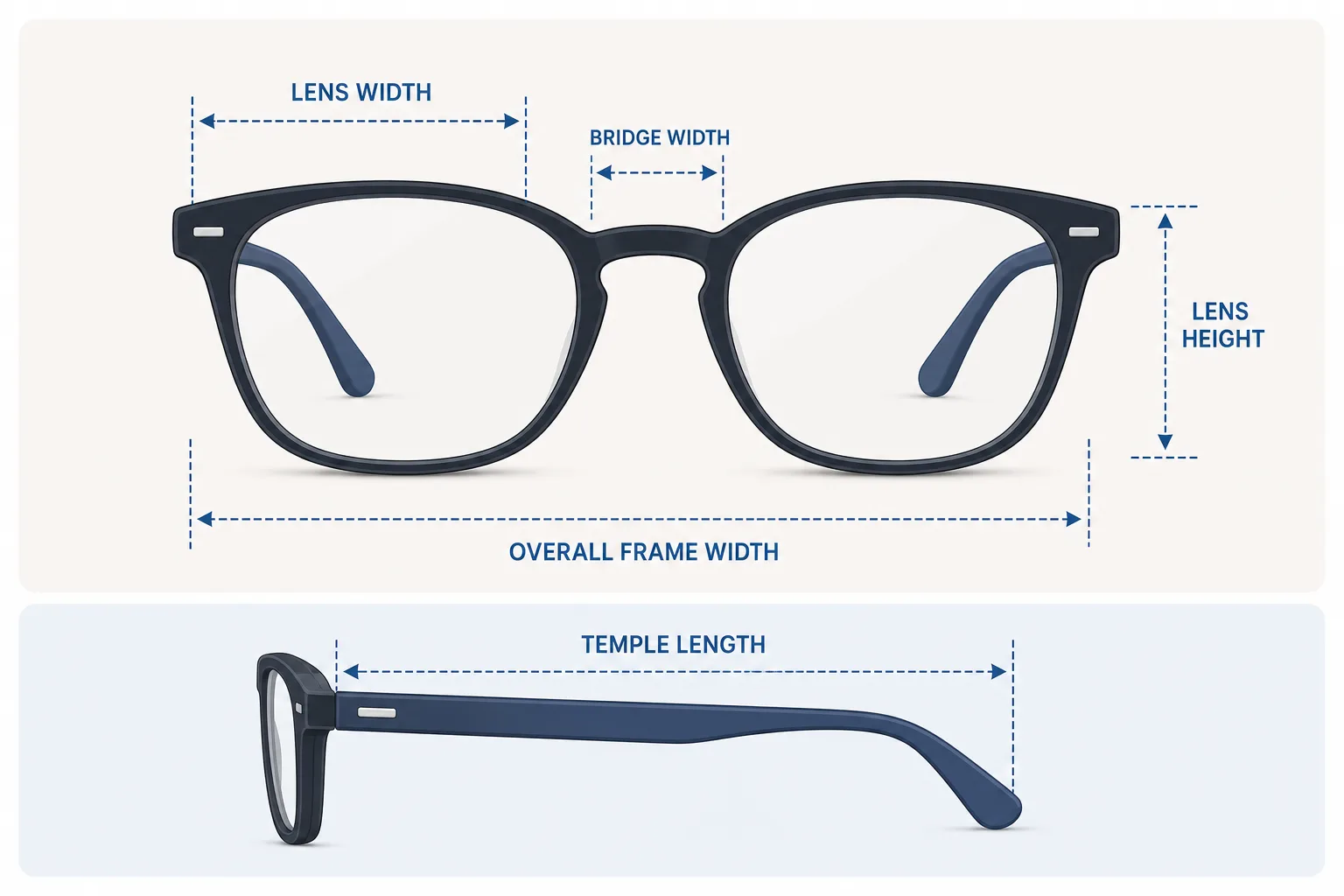
Measurements are one of the most reliable ways to compare frames when you cannot try them on in person.
Practical Fit Examples
Example 1: Small or Narrow Face
A shopper notices that oversized frames often slide or extend too far beyond the face. In this case, overall frame width, bridge fit, and temple length matter more than following trends. A frame that is visually stylish but physically too wide can become frustrating very quickly.
Example 2: Low Bridge Fit Concerns
A shopper finds that glasses rest on the cheeks or slide downward. That may be a clue to review bridge design, nose-pad structure, and whether the frame seems suited to the wearer’s facial shape and bridge height. Online shoppers should look carefully at how the bridge area is designed and ask for professional guidance when unsure.
Example 3: Strong Prescription
A shopper with a stronger prescription wants lenses that look thinner and feel balanced. Smaller lens shapes and lens-index decisions may matter here, but those choices should be considered with professional guidance. The frame itself can influence the look of the finished lens, which is one reason measurements and lens shape deserve more attention than many shoppers expect.
Example 4: Long Workdays
A shopper wears glasses throughout the entire workday and cares about comfort as much as appearance. Frame weight, temple pressure, bridge comfort, and material flexibility may matter more in this situation than the bolder style choice. A frame that looks great for five minutes but feels tiring by mid-afternoon is not a strong buy.

Frame Material Comparison
Material affects more than appearance. It can influence weight, flexibility, feel against the skin, long-term maintenance, and whether the frame seems formal, playful, minimal, or premium. Shoppers who wear glasses all day often feel material differences more than they expect.
| Material | Typical Weight | Flexibility | Durability Considerations | Style | Possible Drawbacks | Best Use Cases |
|---|---|---|---|---|---|---|
| Acetate | Moderate | Moderate | Often solid and style-forward | Color-rich, polished | Can feel heavier than very light metals | Fashion styles, color variety, statement frames |
| Standard plastic | Light to moderate | Varies | Depends on build quality | Casual to modern | Can feel less refined depending on finish | Budget-conscious styles, casual wear |
| Stainless steel | Usually lighter than acetate | Moderate | Common for clean minimal frames | Sleek, neat | May feel colder or more technical in style | Workwear, subtle everyday use |
| Titanium | Often light | Moderate | Often associated with premium lightweight designs | Refined and minimal | Price may be higher | Long wear, lightweight preference |
| Aluminum | Light | Lower to moderate | Can look clean and modern | Modern metallic | Feel and adjustability vary by design | Shoppers wanting a contemporary look |
| TR90 | Light | Higher | Often chosen for flexible everyday wear | Sporty to simple | May not appeal to shoppers wanting a luxury finish | Comfort-focused long wear, active routines |
| Mixed material | Varies | Varies | Depends on the design and hardware | Visually interesting | Fit feel may vary between sections of the frame | Style shoppers who want contrast or detail |
Frame Material Comparison
Choose a material based on real wear habits, not only the product description.
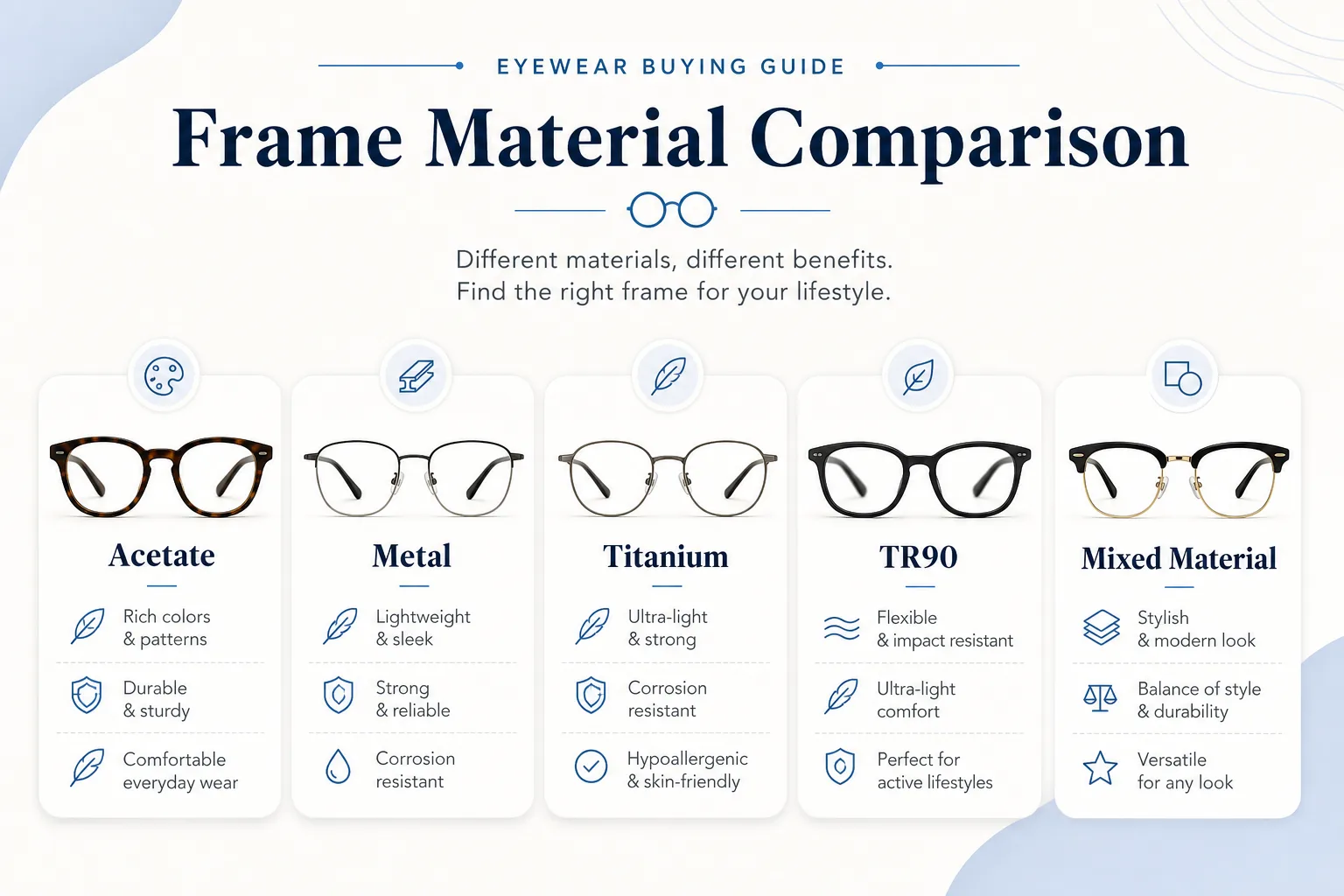
Material choice affects daily comfort as much as style, especially for long wear.
Full-Rim, Semi-Rimless, and Rimless Frames
Full-rim frames usually offer the widest style range. They can visually frame the face more strongly and may feel reassuring to shoppers who like definition or want a broader selection of shapes and colors. Depending on material and size, they may also feel heavier than lighter-looking alternatives.
Semi-rimless frames can create a lighter visual effect while still keeping some structure. Some shoppers like them for workwear or a cleaner profile. But lens shape and maintenance details matter because the lower edge design differs from a full-rim frame.
Rimless frames often appeal to people who want a minimal look and less visible eyewear. They may feel visually lighter, but the hardware and lens setup deserve attention. Some shoppers love how subtle they look, while others prefer the stronger identity of a framed style.
Choosing Frame Colors
Color can change how a frame feels even when the shape stays the same. Neutral tones often work well for everyday wear because they pair easily with changing outfits. Warm tones and tortoiseshell styles can feel classic and soft. Cool tones may feel sharper or more modern. Transparent frames can look lighter and less visually heavy, while brighter colors may suit shoppers who want eyewear to be part of their style statement.
Some shoppers think in terms of skin undertones, hair color, wardrobe, or workplace expectations. Those can all be useful reference points, but none of them should become rigid rules. The strongest color choice is usually the one that you enjoy wearing repeatedly, not the one that a chart tells you to wear.
Choosing Lenses
Lens decisions matter just as much as frame decisions. At a general level, shoppers may compare single-vision lenses, reading lenses, progressives, bifocals, prescription sunglasses, and sometimes photochromic options. Thinner-lens choices and optional coatings can also affect the final order. Not every retailer offers every combination on every frame, so verify the live order page before assuming an option is available.
Optional features such as anti-reflective coatings, scratch-resistant treatments, UV-related options, or blue-light-related lenses may be useful for some shoppers and unnecessary for others. They should be treated as choices to compare, not as automatic upgrades. If you have prescription questions, stronger prescriptions, or uncertainty about which lens type is appropriate, use your current prescription and ask an eye-care professional for guidance rather than guessing online.
FYTOO Women’s Glasses vs Other Shopping Options
| Shopping Option | Convenience | Ability to Try In Person | Frame Variety | Professional Fitting Access | Price Transparency | Return Considerations | Best For |
|---|---|---|---|---|---|---|---|
| Online eyewear retailer | High | Usually limited | Often broad | Low to moderate | Can be good, but total cost still needs review | Must be checked carefully | Shoppers who like browsing from home |
| Local optical store | Moderate | High | Varies by store | High | Varies | Often easier to discuss in person | Fit-focused shoppers |
| Eye doctor’s optical shop | Moderate | High | Varies | High | Usually clearer with staff help | Needs direct review | Complex prescriptions or fitting concerns |
| Department-store optical center | Moderate | Moderate to high | Moderate | Moderate | Varies | Store policy dependent | Shoppers combining errands and browsing |
| Designer eyewear boutique | Lower to moderate | High | Curated | Varies | Often less budget-oriented | Should be reviewed carefully | Shoppers prioritizing brand and styling |
Potential Benefits of Shopping Online
Online eyewear shopping can be useful because it lets you browse from home, compare more styles, filter by frame shape or color, and revisit the same options without feeling rushed. It may also give repeat shoppers a more comfortable way to reorder when they already understand their size and lens needs.
Possible Limitations of Buying Glasses Online
At the same time, you cannot physically try the frame unless the retailer offers a tool that helps simulate fit. Color can look different on screen. Prescription entry must be accurate. Pupillary distance must be right. Stronger or more complex prescriptions may need extra care. Final cost can change after lens selections, and even a stylish frame may still need minor adjustments after delivery.
Before-You-Buy Checklist
Prescription
- Confirm the prescription is current
- Confirm sphere, cylinder, and axis values
- Confirm addition value when applicable
- Confirm pupillary distance
- Ask an eye-care professional for help when uncertain
Frame
- Check lens width
- Check bridge width
- Check temple length
- Check overall frame width
- Compare with a comfortable existing pair
- Review frame material
- Review nose-pad design
- Check listed frame weight when available
Order
- Confirm lens type
- Review optional coatings
- Check total cost
- Check estimated shipping
- Read current return and exchange terms
- Review warranty terms
- Confirm delivery address
- Save the order confirmation
Online Glasses Buying Flowchart
A calm step-by-step process usually leads to better frame decisions than impulse browsing.
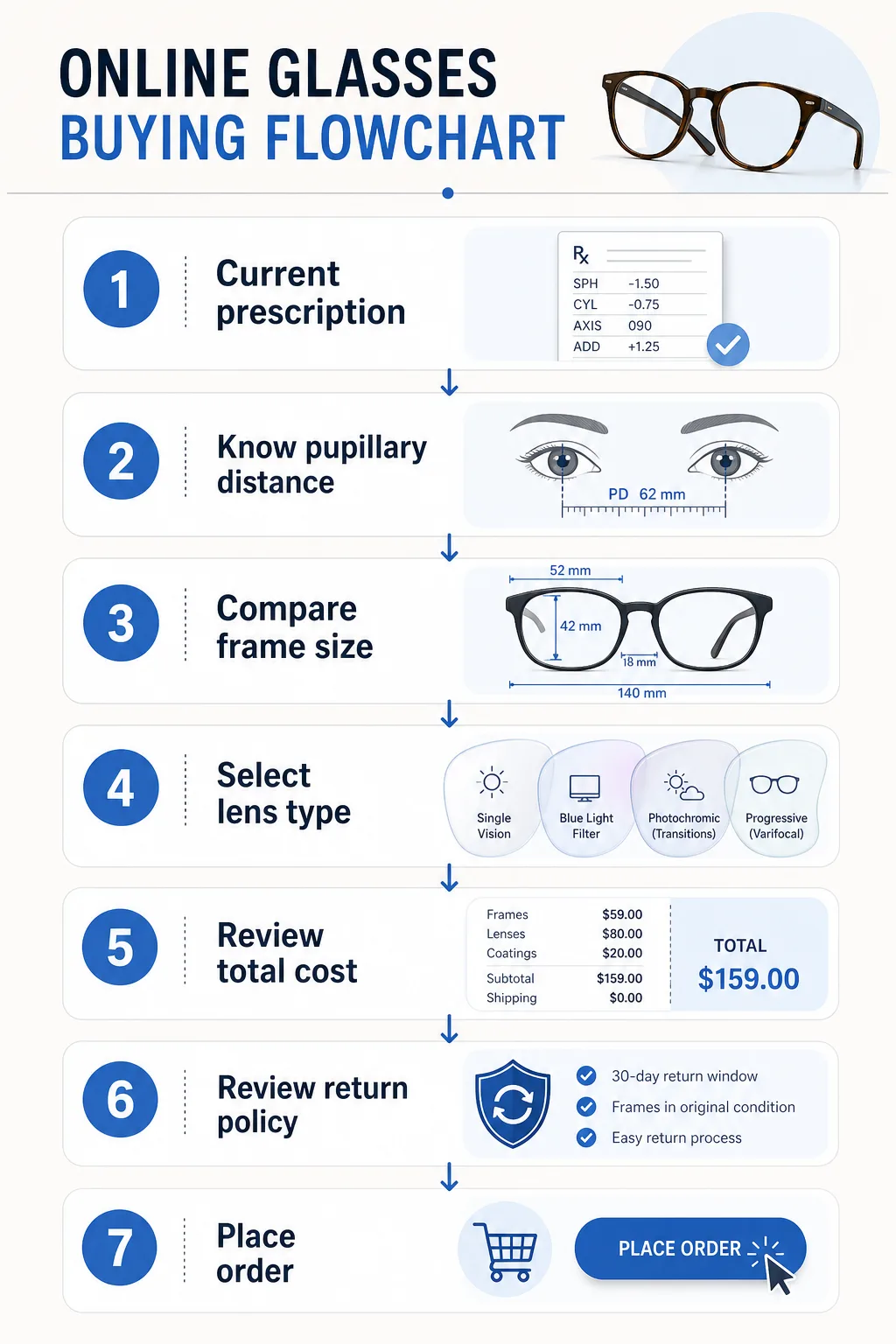
The best online glasses orders are usually the result of accurate information, not fast clicking.
Common Online Glasses Shopping Mistakes
- Using an expired prescription
- Guessing pupillary distance
- Ignoring frame measurements
- Choosing only by appearance
- Forgetting bridge fit
- Not reviewing lens options
- Assuming the advertised frame price includes all lenses
- Not checking the final total
- Ignoring shipping and return terms
- Ordering a strong prescription without understanding lens recommendations
- Choosing an oversized frame without checking width
- Not comparing measurements with an existing pair
How to Place an Online Glasses Order
- Select a frame.
- Review the frame dimensions carefully.
- Choose prescription or nonprescription use.
- Enter prescription details accurately.
- Enter pupillary distance.
- Choose the lens type.
- Review optional lens upgrades.
- Confirm quantity and frame color.
- Review the final price.
- Read shipping and return terms.
- Complete payment.
- Save the confirmation details.
The exact checkout flow can vary from retailer to retailer, and sometimes even by frame or lens type. That is why shoppers should read each step instead of assuming every eyewear checkout works the same way.
Final Recommendation
FYTOO may be worth exploring for shoppers who want to browse women’s glasses online and compare frame styles from home. The best frame still depends on fit, measurements, comfort, lens needs, prescription accuracy, and personal style. A stylish frame is only a strong purchase if it also suits the way you actually wear glasses.
Compare the final total instead of looking only at the starting frame price, and verify current offers and policies directly before ordering. If you have stronger or more complex vision needs, it is wise to get guidance from an eye-care professional rather than relying only on a product page description.
FAQ
Is FYTOO an online glasses retailer?
Based on its public category and product pages, FYTOO presents itself as an online eyewear retailer offering frame and eyeglass shopping options. Product selection and policies may change, so shoppers should verify current details directly on the FYTOO website.
Can I order prescription glasses online?
Yes, many online eyewear retailers allow prescription orders, but shoppers need an accurate current prescription and should follow the retailer’s input steps carefully. For prescription questions, consult an eye-care professional.
How do I know what glasses size I need?
A comfortable existing pair can be a useful reference. Compare lens width, bridge width, temple length, and overall frame width, and verify how the retailer displays measurements because sizing systems may vary.
Which glasses suit a round face?
Many shoppers with round faces consider shapes like rectangles, squares, cat-eye styles, or geometric frames for visual contrast, but face shape is only a guide. Personal preference, comfort, and fit still matter most.
Which glasses suit a square face?
Some shoppers with square faces explore rounder, oval, or softly shaped frames to create contrast, but there is no universal rule. The best frame is the one that fits well and feels right to the wearer.
What is pupillary distance?
Pupillary distance, often called PD, is the measurement between the centers of the pupils. It can matter when ordering prescription eyewear online, and shoppers should use accurate information or ask an eye-care professional for help.
Can I use my existing eyeglass prescription online?
In many cases yes, if the prescription is still valid and complete. Prescription validity can depend on state rules and individual circumstances, so shoppers should review expiration details and consult their eye-care professional when uncertain.
What should I check before choosing lens upgrades?
Review the lens type you actually need, the total cost after upgrades, and whether optional features are useful for your routine. For prescription or lens-performance questions, ask an eye-care professional.
Can online glasses be adjusted after delivery?
Sometimes yes. Minor fit adjustments may be possible locally, but that depends on the frame, materials, and the shop providing the help. Shoppers should also review return or exchange terms before ordering.
What should I review before returning or exchanging glasses?
Read the current return, exchange, warranty, and shipping terms directly on the retailer’s website before ordering. Policies may change and may differ by lens type, prescription customization, or promotion.