
Table of contents
Introduction Why baby shopping adds up fast Step 1: Start with a true baby-needs list Step 2: Separate essentials from convenience extras Step 3: Compare size, price, and usage speed Step 4: Use subscriptions carefully Step 5: Be careful with bundle offers Step 6: Build a monthly baby budget Step 7: Use deals and coupons wisely Quick checklist FAQHow to Save Money on Baby Products Online Without Overbuying
Buying baby products online can make life easier for busy parents. It saves trips to the store, gives you more time to compare options, and helps with predictable restocks like diapers, wipes, bottles, and baby-care basics. At the same time, this category can become expensive very quickly. Many parents shop while tired, rushed, or trying to stay ahead of changing needs. That is completely understandable, but it also creates the perfect situation for overbuying.
Online stores know that parents value convenience. That is why product pages often encourage larger bundles, repeat subscriptions, “must-have” accessories, and multi-item savings. Some of those offers are useful. Many are not. The best way to spend less is not to avoid buying good products. It is to buy with more clarity and less pressure.
This guide is written for everyday parents and caregivers who want a simple, realistic system. The goal is to reduce waste, avoid clutter, and keep the household stocked with the things that truly matter.
Helpful pages on CouponEssentials that fit this topic include:
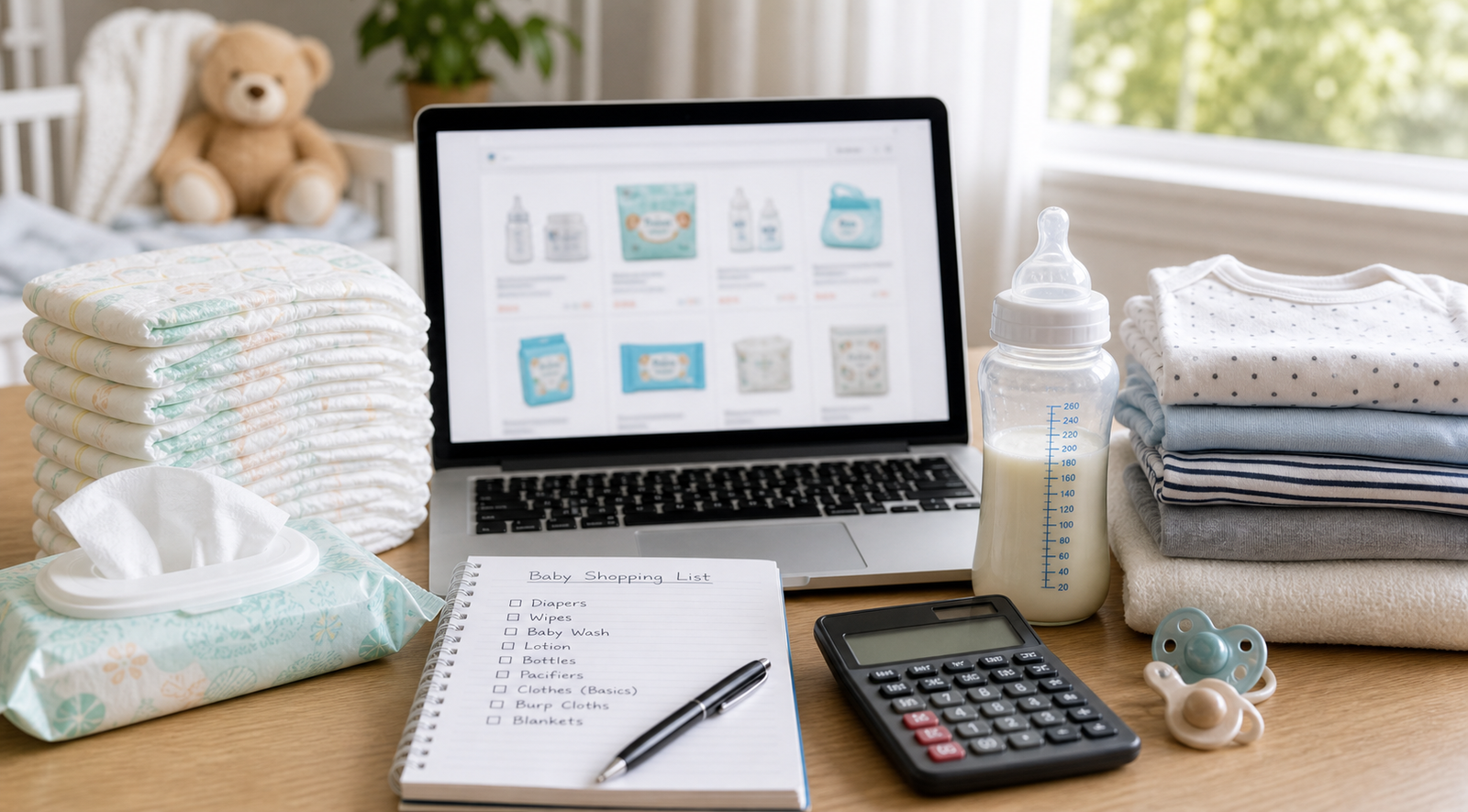
Why baby shopping adds up fast
Baby-product spending grows fast because many items feel urgent, even when they are not. Diapers and wipes are true essentials, but once you are already buying them, it is easy to add lotion, bibs, extra bottles, backup pacifiers, organizers, teething items, travel accessories, and larger-size bundles just in case. That mix of need and uncertainty makes online shopping more expensive than many parents expect.
Another reason costs grow is that babies change quickly. A product that seems helpful one month may become less useful the next. Clothing sizes change. Feeding routines change. Sleep products and travel accessories change. When parents buy too far ahead without thinking about actual timing, they may end up with extra stock they never fully use.
The good news is that you do not need a complicated system to fix this. A few clear habits can help you spend more confidently while keeping stress low.
Urgency feels constant
When shopping for a baby, almost everything can feel important in the moment.
Convenience invites extras
Online stores make it very easy to add more than the household actually needs.
Needs change quickly
Buying too far ahead can lead to wasted products or the wrong sizes.
Simple planning helps
A short list and a calmer budget often save more than chasing random discounts.
Step 1: Start with a true baby-needs list
Before opening a store page, write a short list of the items your baby actually uses on a normal weekly or monthly cycle. This often includes diapers, wipes, feeding supplies, diaper-cream basics, laundry support, burp cloths, and a small number of replacement essentials. Keep the list practical. If an item is not tied to a real need, it should not control the shopping trip.
This list creates structure when you are tired or busy. Instead of reacting to whatever product seems useful in the moment, you begin with what the household already knows it will use. That alone can cut down a surprising amount of extra spending.
Step 2: Separate essentials from convenience extras
Baby shopping becomes easier when you divide purchases into two groups. The first group is essentials. These are the products you know support daily life and must be restocked with some regularity. The second group is convenience extras. These are items that may be helpful, cute, or nice to have, but are not urgent every time you order.
This distinction matters because many online savings tactics are built around adding convenience products to the cart. If the extra item truly improves your routine and fits the budget, that is fine. But if it is mainly being added because the store says it completes the order, it is worth pausing.
Step 3: Compare size, price, and usage speed
The best baby-product deal is not always the largest box. Sometimes larger sizes save money. Other times they simply take up space and lock money into supplies you could have bought later. Ask yourself how quickly the household actually uses the product. Diapers, wipes, and formula-related items may justify larger purchases in some homes. Clothing, niche accessories, and certain care products may not.
When comparing, focus on three things: total cost, cost per unit, and how long the product will last before it is used. That helps you avoid paying for volume you do not really need yet.
| Product type | Best thing to compare | Common mistake |
|---|---|---|
| Diapers | Cost per diaper and size timing | Buying too much in a size the baby outgrows quickly |
| Wipes | Cost per pack and household usage rate | Buying too many extras just because they are bundled |
| Clothes | Season, size, and near-term need | Buying far ahead without knowing what will be used |
| Feeding items | Daily routine and replacement timing | Adding duplicates that do not solve a real problem |
Step 4: Use subscriptions carefully
Subscriptions can be helpful for predictable needs, especially diapers and wipes, but they should be reviewed often. A baby’s routine can change faster than an auto-delivery schedule. If shipments are too frequent, extra stock builds up. If they are too slow, parents make emergency purchases that cost more.
The best subscription habit is simple: keep only the products that have a very steady usage pattern and review delivery timing regularly. Pause or adjust anything that no longer matches your real use.
Step 5: Be careful with bundle offers
Bundle offers are one of the easiest ways for stores to increase baby-order totals. A store may show a diaper bundle, feeding bundle, bath-time set, or “complete essentials” package that feels efficient and reassuring. Sometimes bundles are useful, especially when each item is already on your list. But when one or two extra items are not truly needed, the bundle becomes a softer version of overspending.
A good question to ask is this: if these items were listed separately without the bundle label, would I still buy each one today? If the answer is no, the bundle may not be the strong deal it seems.
Step 6: Build a monthly baby budget
A simple baby budget can be divided into three parts: recurring essentials, expected convenience purchases, and occasional replacements. Recurring essentials include items like diapers and wipes. Expected convenience purchases include things like a few feeding or travel-related additions that truly help routine. Occasional replacements cover items that wear out or become necessary less often.
This structure helps parents protect money for the essentials first. It also reduces guilt because it leaves some room for useful extras without letting the whole budget drift.
One helpful habit is to review the baby budget at the same time each month. Ask which items ran out faster than expected, which products still have plenty left, and which recent purchases did not really improve daily life. That short check-in helps future orders become more accurate. Over time, many parents find that the best savings do not come from extreme couponing. They come from fewer rushed orders and a more realistic view of what the baby actually uses.
Step 7: Use deals and coupons wisely
Coupons and deals work best when they support planned purchases. If a code lowers the cost of products you were already about to order, great. If a deal encourages you to add products the household does not really need yet, the saving is probably weaker than it looks.
That is why targeted browsing matters. Start with your list, check the relevant store or deals pages, and use coupons as support rather than as the reason to buy. That keeps spending intentional.
Quick checklist
- Write a real restock list before browsing.
- Separate essentials from convenience extras.
- Compare size and unit cost with actual usage speed.
- Review subscriptions often.
- Question bundle offers before trusting them.
- Use coupons to support planned purchases, not create new ones.
Saving money on baby products is not about buying less care. It is about buying with calmer timing, better comparison, and more confidence. A simpler cart usually leads to a stronger budget and a less stressful home routine.
FAQ
Are baby-product subscriptions always worth it?
No. They can be useful for predictable essentials, but only when the delivery schedule matches your baby’s real usage and the household does not start building up extra stock.
Is it smart to buy baby items in large bundles?
Only when each item in the bundle is something you already planned to buy. If the bundle adds unneeded extras, the savings may be smaller than they appear.
What is the best first step to reduce baby-product overspending?
Make a short restock list before opening any store page. That helps you stay focused on what the household really needs now.