
Table of contents
Introduction Why fitness-equipment shopping goes wrong Step 1: Define the workout problem first Step 2: Separate core gear from motivational extras Step 3: Compare size, durability, and real use Step 4: Watch seasonal pricing and trend pressure Step 5: Avoid oversized bundles and duplicates Step 6: Build a simple home-fitness budget Step 7: Use deals with a plan Quick checklist FAQHow to Save Money on Fitness Equipment When Shopping Online
Fitness equipment is one of the easiest categories to buy with optimism. A set of dumbbells can represent a fresh routine. A yoga mat can feel like a better habit starting soon. Resistance bands, benches, kettlebells, walking pads, compact bikes, and storage racks all suggest progress, discipline, and better health. That motivation can be positive, but it can also lead to overspending when the gear does not match real habits.
Online shopping makes this category even more emotional. Stores present polished setups, transformation-focused language, and big sale windows that make equipment feel urgent. Some of those promotions are useful. Many simply encourage people to buy more gear than they need right now. The strongest shopping results come from starting with your actual routine, your available space, and the kind of equipment you will realistically use over time.
This guide is for shoppers who want to spend wisely on home fitness gear without losing motivation. The goal is not to talk you out of healthy habits. The goal is to help you buy the right equipment at the right level.
Helpful CouponEssentials pages for this topic include:
Why fitness-equipment shopping goes wrong
Fitness-equipment shopping often goes wrong because it mixes a real goal with an imagined future. You may want to build a home workout habit, which is a strong reason to buy something. But once shopping begins, it becomes easy to imagine a more advanced routine than the one you actually live now. That is how a shopper who needed a basic mat and resistance bands ends up comparing racks, benches, multiple weight systems, or accessories that add cost without truly increasing consistency.
Another issue is that fitness equipment is often marketed in categories of transformation instead of function. That means buyers see the identity promise before they think about space, durability, workout type, and frequency of use. A lower-stress shopping method starts with the function instead.
Motivation can inflate carts
Excitement about starting fresh often leads to buying more gear than necessary.
Space matters more than people expect
A good piece of fitness equipment still fails if it does not fit daily life and home layout.
Simple gear often works best
For many people, a few versatile items create better long-term use than a large setup.
Function beats trend
The right purchase is the one you will actually keep using weeks from now.
Step 1: Define the workout problem first
Before shopping, write down the problem the equipment should solve. Do you need a way to do strength training at home? Do you want a low-impact option for short daily movement? Are you trying to support stretching, walking, or a small-space routine? When the problem is clearly defined, product comparisons become much easier.
For example, if the goal is beginner strength training, adjustable dumbbells or resistance bands may be more useful than a large machine. If the goal is short daily movement, a mat and a few compact tools might beat a bigger purchase. The more specific the purpose, the easier it is to ignore flashy but unnecessary upgrades.
Step 2: Separate core gear from motivational extras
Core gear is the equipment that truly enables the workout type you plan to do. Motivational extras are the items that may feel inspiring or attractive but are not essential to starting well. Some extras become worthwhile later. The problem is when they enter the first purchase too soon.
This is important because online stores often present complete “starter bundles” that include several extra accessories. If the bundle is truly useful and the items fit your routine, fine. But many shoppers do better by buying the core item first and letting the routine prove what else is needed.
Step 3: Compare size, durability, and real use
The best fitness-equipment deal is not just about price. It is about whether the product fits your home, survives your real use, and supports your routine without becoming annoying. A cheaper item that is unstable, too bulky, or uncomfortable is not a long-term savings. A slightly more expensive item can be better value if it is durable, space-efficient, and much more likely to stay in use.
| Equipment type | Best thing to compare | Common mistake |
|---|---|---|
| Dumbbells and kettlebells | Weight flexibility and durability | Buying too heavy too early |
| Resistance bands | Versatility and replacement value | Buying large sets without knowing what you use |
| Mats and small accessories | Comfort and frequency of use | Paying extra for style over function |
| Cardio equipment | Space, storage, and routine fit | Buying a large machine without a realistic plan to use it |
Step 4: Watch seasonal pricing and trend pressure
Fitness equipment often sees stronger interest around New Year resets, seasonal sale periods, and general wellness pushes. That can create good buying windows, but it also creates hype. Trend pressure is strongest when shoppers feel like they must transform everything at once. In reality, steady use matters far more than buying during the loudest marketing moment.
A smart approach is to watch price changes briefly and compare with your real readiness. If you are already committed to using the gear, a deal window helps. If you are still unsure what routine you will actually follow, waiting can be the better saving.
Step 5: Avoid oversized bundles and duplicates
Many shoppers accidentally buy duplicates in this category. They order a set of resistance bands, then another style because it looks more complete. They buy a mat, then a thicker one, then accessories that overlap. This happens because fitness shopping often feels like building a full identity instead of solving one problem at a time.
A better approach is to let your routine earn the next purchase. If you use the first items consistently and notice a real gap, then add the next piece. That makes each purchase more likely to hold value.
Step 6: Build a simple home-fitness budget
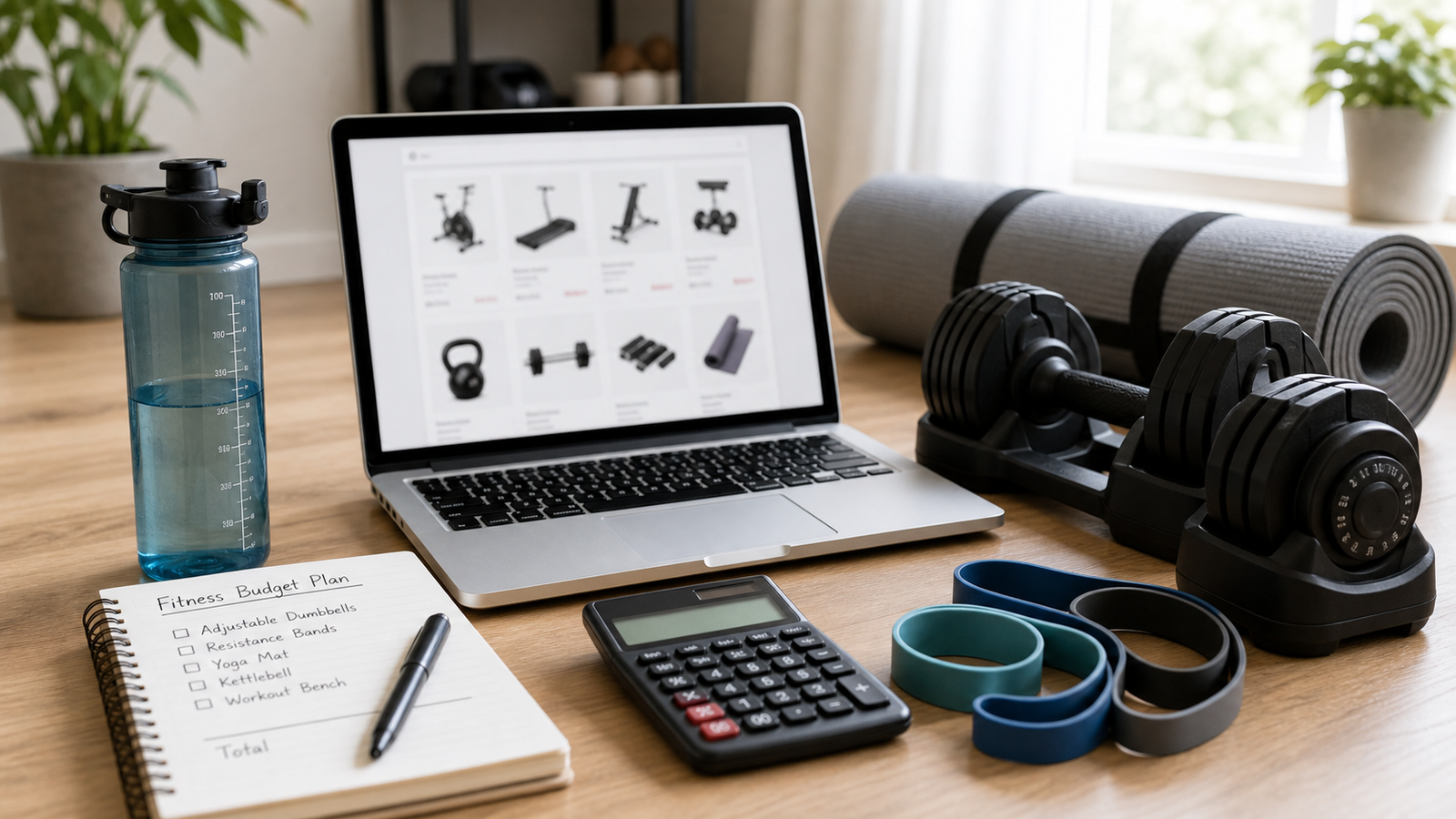
A practical fitness budget can be divided into three parts: foundational gear, optional upgrades, and replacement or maintenance needs. Foundational gear is what you need to begin. Optional upgrades are items that improve convenience later. Replacement needs cover things like worn mats, broken bands, or storage additions once the routine becomes stable.
This keeps spending grounded. It also helps you avoid putting too much money into enthusiasm before the habit itself has become steady.
Another useful habit is to wait until the current routine feels consistent before expanding the setup. If the mat, bands, or weights are already being used several times a week, then the next purchase is easier to justify. If the first items are still mostly untouched, adding more gear usually does not solve the real issue. This simple pause protects the budget and keeps the focus on habit quality instead of equipment quantity.
Step 7: Use deals with a plan
Good deals are helpful when they reduce the cost of gear you already know fits your plan. They are less helpful when they convince you to buy a larger system or more accessories than you truly need. That is why the strongest fitness-shopping habit is to define the routine first and let the deal support it afterward.
If you are unsure about a piece of equipment, give yourself one more question before checkout: can I clearly picture when and where I will use this during a normal week? If the answer is vague, the purchase may still be more motivational than practical. That small pause often protects shoppers from filling valuable space with gear that looked exciting online but did not fit real life well enough.
Quick checklist
- Define the workout problem before you compare products.
- Separate core gear from motivational extras.
- Compare price together with durability and space fit.
- Be careful with trend-driven urgency.
- Add equipment in layers instead of all at once.
- Use deals to support a real routine, not replace one.
Fitness equipment can be a valuable investment, but only when it supports a routine you will truly use. A smaller, smarter setup often creates better long-term results than a larger cart built on temporary excitement.
FAQ
What is the best first step before buying fitness equipment online?
Define the exact workout problem you want to solve. This makes it easier to choose equipment that fits your routine instead of buying gear based only on motivation or trends.
Should I buy a full fitness bundle to save money?
Only if the items clearly fit a routine you already expect to follow. Many shoppers save more by starting with the core gear first and adding extras only when needed.
How do I avoid buying fitness gear I will not use?
Match the purchase to a realistic home routine, available space, and your current workout level. Gear that fits daily life is much more likely to be used consistently.