
Table of contents
Introduction Why appliance shopping gets confusing Best times to buy small kitchen appliances Step 1: Decide what problem the appliance should solve Step 2: Compare features that matter Step 3: Look beyond the headline discount Step 4: Watch for deal patterns Step 5: Avoid duplicate-function appliances Step 6: Review warranty, returns, and counter space Quick comparison table FAQWhen to Buy Small Kitchen Appliances Online for Better Deals
Small kitchen appliances can improve everyday life in useful ways. A good blender can make breakfasts easier. An air fryer may speed up weeknight meals. A toaster, kettle, coffee maker, rice cooker, or compact food processor can make routines more efficient when the product matches how you actually live. The problem is that online appliance shopping can get noisy very quickly. Similar-looking models appear at different prices, feature lists can feel overwhelming, and sale banners make every week seem like the perfect time to buy.
This guide is designed to make appliance shopping simpler. Instead of chasing every promotion, you will learn how to recognize better buying windows, compare features that really matter, and avoid paying for extras that do not improve your kitchen routine. The goal is not to buy the fanciest machine. The goal is to buy the appliance that fits your use, your space, and your budget.
Helpful CouponEssentials pages for this topic include:
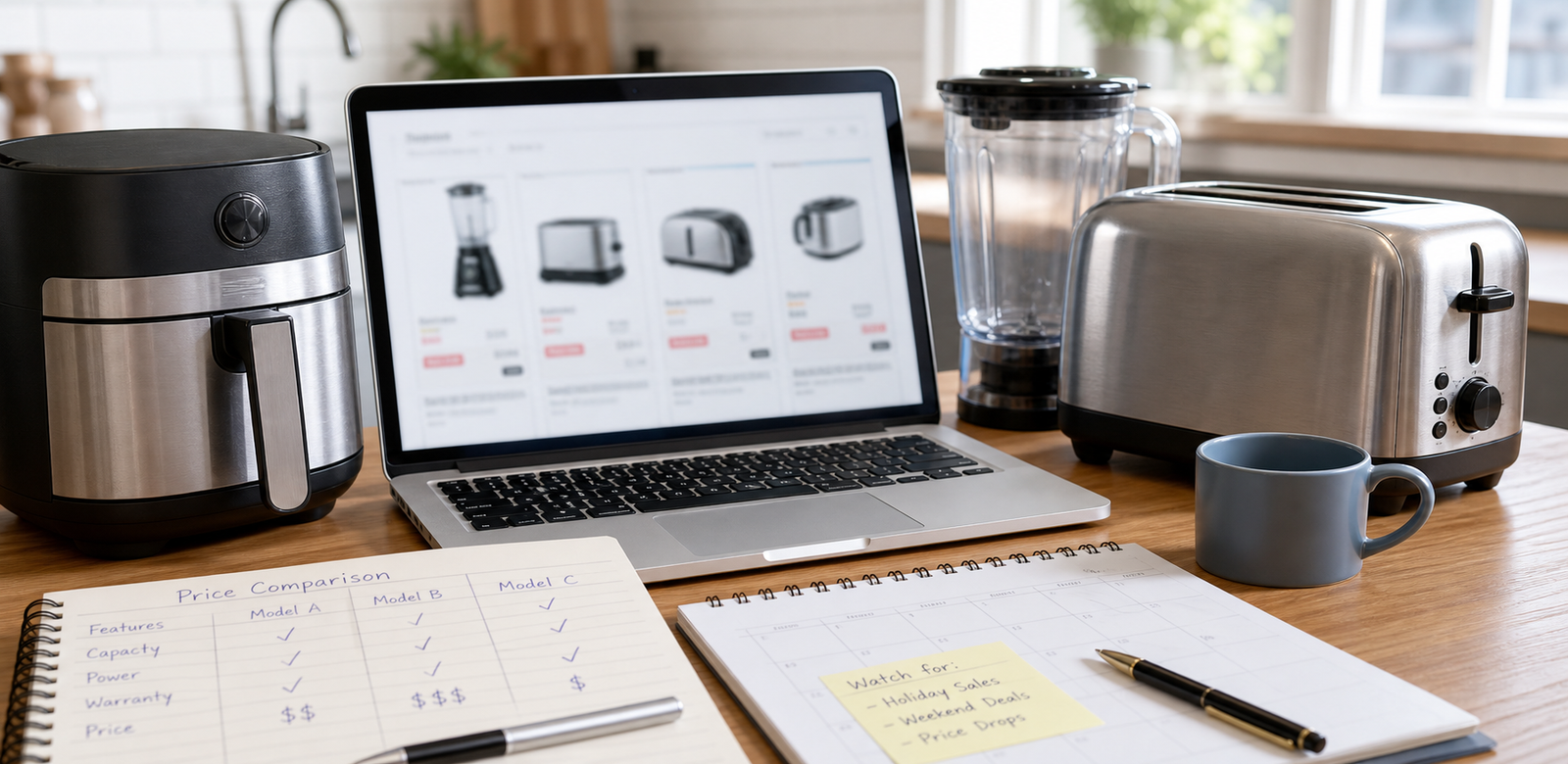
Why appliance shopping gets confusing
Kitchen appliance shopping becomes confusing because many models promise similar results with slightly different features, sizes, or bundle offers. A shopper may start by comparing two air fryers and end up looking at six. A blender search can quickly turn into decisions about power levels, jar material, preset modes, cleaning convenience, and noise. Stores also mix practical price reductions with urgency language, which makes it harder to tell whether you are seeing a genuinely good opportunity or just a normal rotating sale.
Another challenge is that many small appliances are marketed around aspiration. Product pages often suggest a better, healthier, faster, or more organized lifestyle. Sometimes the product truly helps. Other times the excitement is larger than the real daily benefit. That is why a good buying plan begins with your routine instead of the product page.
If you want better deals, timing matters, but timing alone is not enough. The best outcomes happen when timing, feature fit, and real need all meet in the same decision.
Too many similar models
Small differences can make comparisons feel harder than they need to be.
Features can distract
Some features improve daily use, while others mainly help marketing.
Sale language creates pressure
Many shoppers buy faster than they compare because the page feels urgent.
Routine should lead
A useful appliance solves a real kitchen problem often enough to earn its space.
Best times to buy small kitchen appliances
Some of the better times to watch for small kitchen appliance deals are major retail sale windows, holiday weekends, seasonal kitchen refresh periods, back-to-school timing for compact appliances, and Black Friday-style promotional periods later in the year. But you do not need to wait only for big national sale events. Smaller price drops also happen when stores rotate inventory, spotlight home categories, or compete across kitchen and household sections.
The smartest approach is to watch appliance deals when you are already close to needing the product. If your blender is failing, if you are setting up a dorm, if you are replacing a coffee maker, or if you know you will use an air fryer often, then a sale window becomes more useful. If you are browsing only because something looks trendy, timing matters less than discipline.
Many shoppers also do well by watching price patterns over a short period instead of buying on the first promotion. When you observe a category for even a week or two, it becomes easier to recognize whether the current price really looks strong.
Step 1: Decide what problem the appliance should solve
Before comparing models, write one sentence about the job the appliance should do. This keeps the search focused. For example: “I need a toaster that handles daily family breakfasts,” or “I want a blender for smoothies and simple sauces,” or “I need a compact air fryer for quick dinners in a small kitchen.”
That one sentence acts like a filter. If you mainly want simple weekday convenience, you may not need the most advanced model in the category. If you cook for several people, capacity may matter more than smart presets. If your space is tight, footprint may matter more than extra modes. A product becomes easier to compare when you know what job it must do.
Step 2: Compare features that matter
Every appliance category has a few features that genuinely affect satisfaction. For air fryers, that might be basket size, ease of cleaning, and counter fit. For blenders, it may be power, jar size, and cleaning convenience. For toasters, slot width, browning consistency, and ease of use often matter more than style. For coffee makers, brew capacity, timer options, and maintenance can matter more than decorative extras.
A useful comparison habit is to pick three must-have features and ignore the rest until later. This keeps the process calm. If a model does not meet the three main needs, it does not deserve more of your attention. This method also protects you from paying more for features that look impressive but do not change daily life in a meaningful way.
Step 3: Look beyond the headline discount
A 30 percent discount sounds exciting, but it only matters if the final product still fits your needs. Look at the total price, shipping, expected delivery time, return process, and whether accessories are required. Also consider whether the lower price is attached to an older version, a smaller size, or a less useful bundle.
Sometimes a slightly higher price is the smarter value because the product is easier to clean, more practical to store, or better matched to daily use. Appliance savings are strongest when the product lasts and stays useful. A cheap appliance that becomes annoying quickly is not a true deal.
Step 4: Watch for deal patterns
Online appliance deals often repeat in predictable ways. One store may discount air fryers while another pushes blenders. Home-category promotions often appear around household refresh periods, large retail events, and holiday sale windows. If you track the category briefly, you may notice that some promotions return often enough that buying immediately is not necessary.
This matters because sale urgency causes many appliance mistakes. If you are not replacing a broken item today, you usually have enough time to compare at least a little. Even a short wait can help you separate a normal rotating sale from a truly attractive price.
Step 5: Avoid duplicate-function appliances
One of the most common kitchen overspending patterns is buying appliances that solve problems your current tools already solve well enough. A new compact gadget can look efficient online, but it still needs storage space, cleaning time, and regular use to justify the cost. Before buying, ask whether the appliance adds a real new function or simply overlaps with something you already own.
This does not mean you should never upgrade. A better product may reduce time, improve consistency, or replace a frustrating old appliance. The key is honest comparison. If the new appliance will truly get regular use, the purchase may be worth it. If it mainly feels exciting because the photo is attractive and the discount is strong, it may be better to wait.
Step 6: Review warranty, returns, and counter space
Small appliances are easier to buy well when you think about the full ownership experience. Will it fit the space where you plan to use it? Is it easy to store? How hard is it to clean? Is the return process clear if the product does not match expectations? Are replacement parts or normal maintenance needs obvious?
These questions protect you from buying an appliance that looks great online but becomes inconvenient at home. A good deal should survive real kitchen life, not only the product listing.
Quick comparison table
| Question | Why it matters | Easy buying check |
|---|---|---|
| What job should it do? | Keeps the search focused | Can I explain the need in one sentence? |
| Which 3 features matter most? | Prevents distraction | Am I paying for features I will rarely use? |
| Is the total value strong? | Protects against weak “discounts” | Does the final cost still make sense? |
| Will it earn its space? | Reduces clutter and regret | Will I use it often enough each month? |
The best time to buy a small kitchen appliance is when a real need meets a genuinely good offer. Timing helps, but clarity helps more. When you shop with a plan, compare useful features, and stay honest about your routine, appliance deals become much easier to judge.
FAQ
What is the best way to compare small kitchen appliances online?
Start by defining the exact job the appliance needs to do, then compare only the features that matter most for that use. This keeps the process focused and reduces distraction from less useful extras.
Should I wait for a big sale event to buy a kitchen appliance?
Big sale events can help, but you do not always need to wait for one. A better rule is to watch the category when you are already close to needing the item and compare prices over a short period first.
How do I avoid buying duplicate-function kitchen gadgets?
Ask whether the appliance solves a real kitchen problem better than what you already own. If it only overlaps with current tools and would not be used often, it may not be worth the cost or storage space.